Sponge Filter for Betta Fish: How It Works + Best Picks
A sponge filter for betta fish gives gentle flow and safe biofiltration for under $10. See how it works, which size to buy and the air pump it needs.
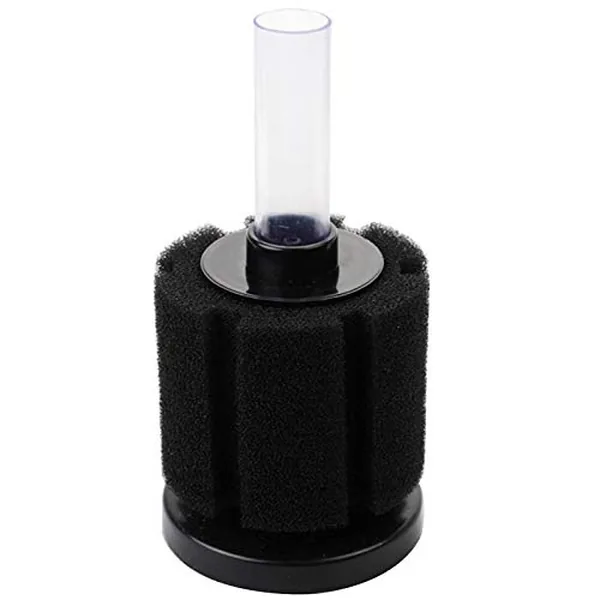
A sponge filter is the best filter for most betta tanks because it gives gentle, bubble-driven flow that will not tire a betta's long fins, plus strong biological filtration, all for under $10. It needs a separate air pump to run. Match the sponge to your tank size, pair it with a quiet mini pump, and clean it only in old tank water so you do not kill the beneficial bacteria.
We earn a commission if you buy through Amazon links. It never changes the score. How we make money.
A sponge filter for betta fish solves the one problem most betta setups have: too much current. Bettas are weak swimmers with long fins that tire in a strong flow, and a sponge filter gives them gentle, bubble-driven filtration for under $10. It is also the safest filter for a tank with fry or shrimp, because there is no intake to suck them in. Here is how a sponge filter actually works, which size and air pump to pair with your tank, and the best-selling sponges worth buying.
How does a sponge filter work?
A sponge filter is deceptively simple: a foam block, an air pump, and a tube. The pump pushes air down into the base of the sponge, and as the bubbles rise up the lift tube they drag water through the foam behind them. That slow pull of water through the sponge is the whole filter.
It does two jobs at once. Mechanically, the foam traps debris and uncured food. Biologically, and this is the important part, the huge surface area of the sponge becomes home to the beneficial bacteria that convert toxic ammonia and nitrite into far safer nitrate. A mature sponge is a living biofilter. That is why you never clean it in tap water, which would kill the colony and crash your cycle.
Because the flow is driven by rising bubbles rather than a motor, it is inherently gentle, which is exactly what a betta wants. There is no spinning impeller and no narrow intake slot, so there is nothing to shred a fin or trap a shrimp.
Best sponge filter for betta fish, and for shrimp and fry
The standard single-sponge pick most betta keepers reach for: gentle flow, strong biofiltration, under $10.
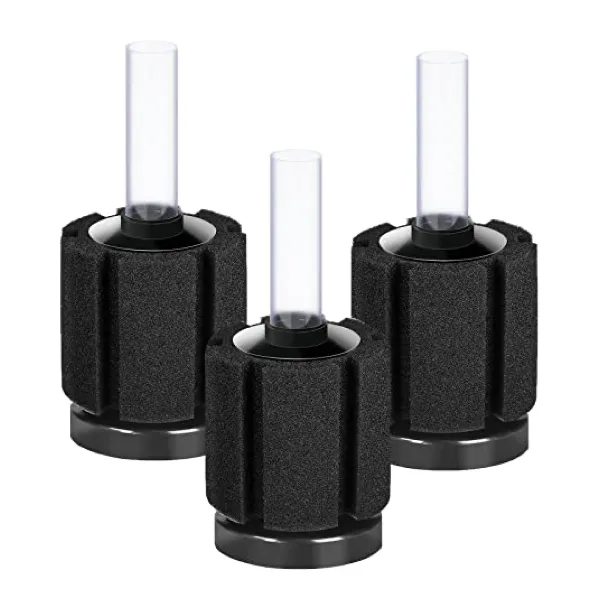
The value buy if you run more than one tank, or want spare sponges to swap in while others dry.
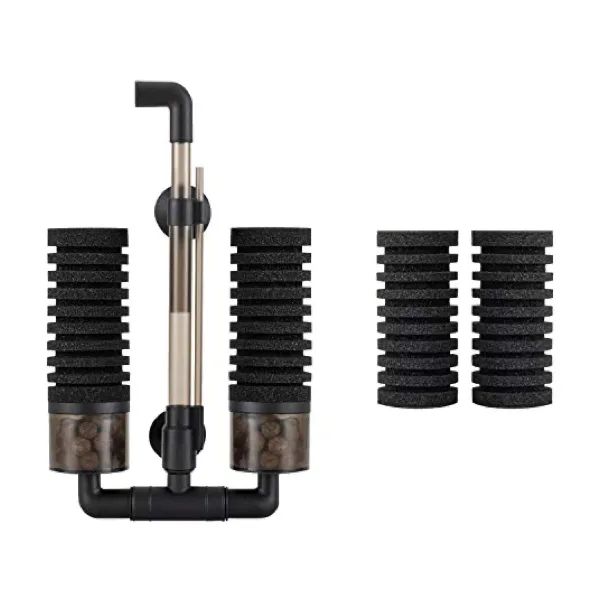
A double sponge for larger or more heavily stocked betta tanks, with more biological media and a backup side.
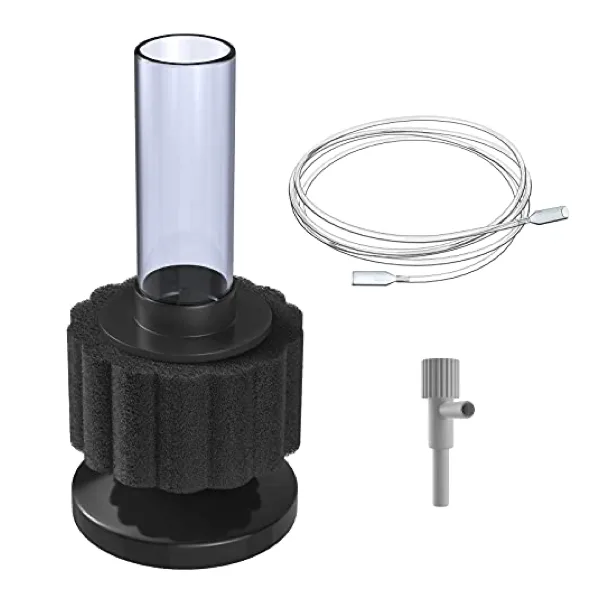
The smallest footprint, sized for nano and 2.5 to 5 gallon betta tanks where a full sponge is too big.
The good news is these are cheap, so you can match one closely to your tank. The picks below are current best sellers, chosen for a betta's need for gentle flow. Prices were checked on the publish date and move.
| Sponge filter | Best for | Roughly |
|---|---|---|
| AQUANEAT single | A standard betta tank, the default pick | Under $10 |
| AQUANEAT 3-pack | Stocking spares or multiple small tanks | Best value per sponge |
| Hygger double sponge | Larger or more heavily stocked betta tanks | More biofiltration |
| Pawfly mini | Nano and 2.5 to 5 gallon betta tanks | Smallest footprint |
The single AQUANEAT is the one most betta keepers reach for, the 3-pack is the value buy if you run more than one tank, the hygger double gives more biological media for a bigger setup, and the Pawfly mini suits the smallest nano tanks.
Sizing: sponge, tank and air pump
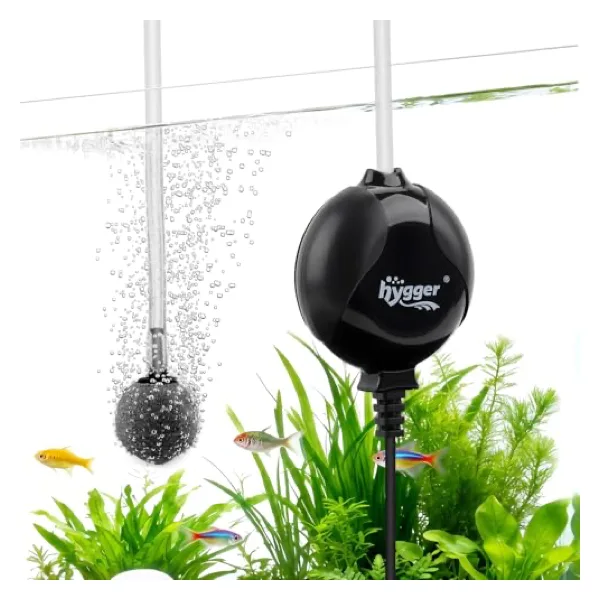
The quiet mini pump that drives the sponge; low output is ideal for a betta, and it runs a nano tank without a roar.
Two things need sizing: the sponge to the tank, and the air pump to the sponge. Undersize the sponge and it clogs fast; undersize the pump and the sponge barely moves water.
| Tank size | Sponge | Air pump |
|---|---|---|
| Up to 10 gallons | Single small or mini sponge | Quiet mini pump, lowest output |
| 10 to 20 gallons | Standard single or double sponge | Small pump, about 15 to 40 GPH |
| 20 to 40 gallons | Large double sponge, or two sponges | Medium pump with more output |
The air pump is the part people forget to budget for, because a sponge filter does not run without one. A quiet mini pump is plenty for a betta tank, and a model that includes a check valve and an air stone saves you buying them separately. To sanity-check flow for your tank, our filter GPH calculator gives the turnover a filter should provide.
How to set up a sponge filter
Setup takes five minutes:
- Rinse the new sponge in dechlorinated or tank water to remove manufacturing dust.
- Assemble it: push the lift tube onto the sponge base, and fit an air stone inside the tube base if your kit includes one, for finer, quieter bubbles.
- Connect the airline from the pump to the tube, with a check valve in the line so water cannot siphon back into the pump if it stops.
- Place the pump above the water line, or use the check valve, and sink the sponge in a back corner.
- Turn it on and adjust the pump or a valve until the bubbles are a steady, gentle stream, not a rolling boil.
A brand-new sponge is not yet a biofilter. It needs weeks to grow its bacteria, so cycle the tank before adding a betta, or seed the sponge by squeezing an established filter's gunk into it. Our fishless cycle guide walks through it.
How to clean a sponge filter without crashing the cycle
This is the step that goes wrong most. The bacteria you worked weeks to grow live on the sponge, and tap water's chlorine kills them.
Clean it the right way: at a water change, take out a cup of the tank water you are removing, and squeeze and swish the sponge in that cup until the worst of the gunk is out. Never rinse it under the tap, never replace both sponges at once on a double unit, and never clean it so thoroughly that it comes out white. You want it functional, not sterile.
Squeeze in tank water, never tap water. Chlorine in tap water kills the beneficial bacteria that make the sponge a filter. Always clean the sponge in old tank water at a water change, and only enough to restore flow.
How often? When the flow visibly weakens, which is usually every few weeks, not on a fixed schedule. A sponge that still flows well is a sponge you can leave alone.
Sponge versus HOB filter
A sponge filter is not the only gentle option. A hang-on-back (HOB) filter with the flow baffled also works, and it adds chemical filtration a sponge lacks. The trade is that a sponge is cheaper, quieter about fin-safety and has no intake, while an HOB moves more water and hides the equipment. For a deeper comparison on a bigger tank, see our sponge versus HOB filter guide, for small-tank picks the best filter for a 5-gallon tank, and the full filters category for every type side by side. Whichever you choose, a betta needs a filter and a heater, as covered in do betta fish need a heater and filter.
Sources
- Manufacturer product listings for each sponge filter and air pump, for sponge size, intended tank range and included accessories.
- The biofiltration principle, that beneficial bacteria on the sponge convert ammonia and nitrite and are killed by tap-water chlorine, is standard aquarium nitrogen-cycle practice, covered in our fishless cycle guide.
For a betta, a sponge filter is hard to beat: gentle flow, no intake to catch fins or shrimp, real biofiltration, and a price under $10 before the air pump. Size the sponge to your tank, run it off a quiet mini pump, and clean it only by squeezing it in old tank water. Do that and you have the safest, cheapest filter a betta can have, with nothing to tire the fish or crash the cycle.
Common questions
How does a sponge filter work?
An air pump pushes bubbles up a lift tube, and the rising bubbles pull water through a foam sponge. The foam traps debris and, more importantly, hosts the beneficial bacteria that convert ammonia and nitrite into safer nitrate. The flow is gentle because it is driven by bubbles, not a motor.
How do you clean a sponge filter?
At a water change, squeeze and swish the sponge in a cup of the old tank water you removed, just until the worst gunk is out. Never rinse it under the tap, since chlorine kills the beneficial bacteria, and never clean it until it comes out white.
How do you set up a sponge filter?
Rinse the sponge, push on the lift tube with an air stone inside if included, connect the airline from the pump with a check valve in the line, place the pump above the water line, and adjust the flow to a steady gentle stream. A new sponge needs weeks to grow its bacteria, so cycle the tank first.
Does a sponge filter need an air pump?
Yes. A sponge filter has no motor of its own; an air pump drives the bubbles that pull water through the sponge. A small, quiet mini pump is plenty for a betta tank, and one that includes a check valve and air stone saves buying them separately.