Best Betta Fish Tank: 2.5 to 10 Gallons Compared
The best betta fish tank for most people is a 5-gallon glass kit with a gentle filter. What each size buys, and the heater every kit lacks.
We earn a commission if you buy through Amazon links. It never changes the score. How we make money.
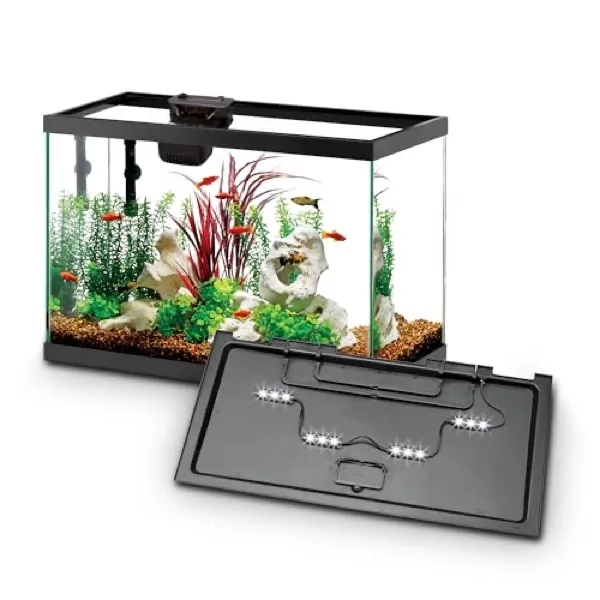
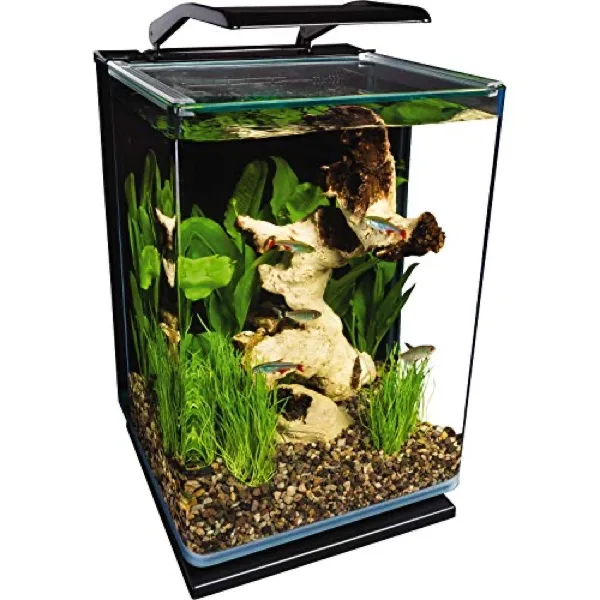
For most people the best betta fish tank is a 5-gallon glass kit with a gentle, adjustable filter and a small heater. Five gallons holds a steady temperature and dilutes waste, which is what keeps a betta healthy; 2.5 to 3 gallons is the practical minimum, and 10 gallons adds room for tankmates. Whatever size you pick, budget for the heater most kits leave out.
Betta fish are hardy, but the bowl they are so often sold with is the single biggest reason they die early. The honest answer: a 5-gallon glass tank with a gentle filter and a small heater is the best betta fish tank for most people. It is big enough to stay stable, cheap enough to gift, and the only size most kits still skimp on the one thing a betta truly needs, which is heat.
Below is the size ladder, what each rung actually buys you, and the three add-ons nearly every "complete" betta kit leaves out.
| Tank size | Best for | What it buys |
|---|---|---|
| 2.5 to 3 gallon | A single betta in a warm room, desk or dorm | The practical minimum; small water volume swings temperature and waste faster |
| 5 gallon | Most people, most bettas | The sweet spot: stable water, room for plants and a cave, easy to heat |
| 10 gallon | A betta plus a few tankmates, or a planted display | Far more stability and stocking room; needs a heater and gentle flow |
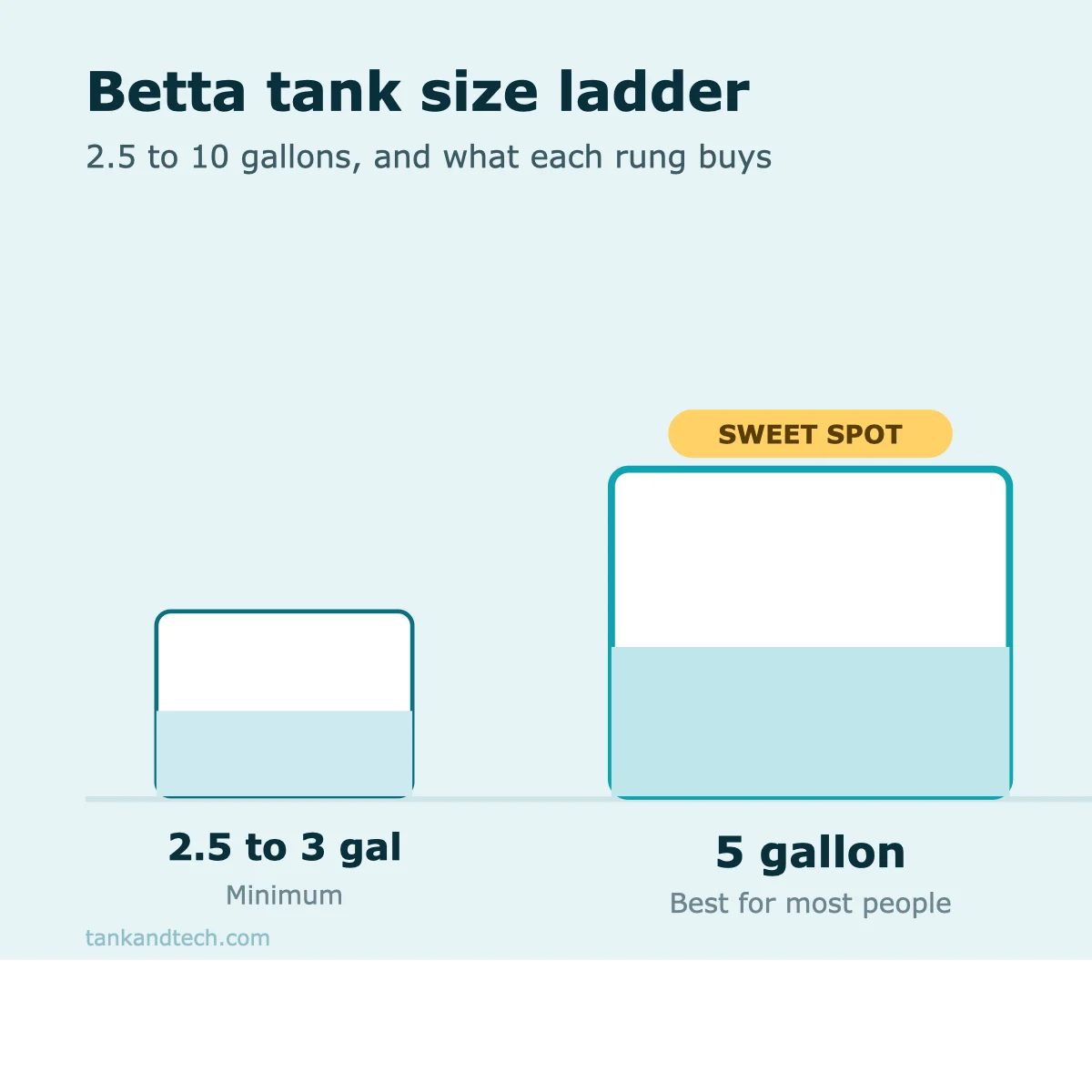
How big a tank do betta fish need?
The old "bettas live in puddles" line is a myth that sells bowls. In the wild, Betta splendens lives in shallow but expansive water: rice paddies, slow streams and floodplains across Thailand, per Seriously Fish. The fish tolerates poor conditions, which is not the same as thriving in them.
For a home tank, five gallons is the figure most experienced keepers settle on, and it is the one we build this guide around. The reason is not swimming room so much as stability. A small volume of water heats and cools fast, and ammonia from waste concentrates quickly, so a 1 or 2 gallon bowl asks you to be perfect every day. Five gallons forgives the odd missed water change and holds a steady temperature once a heater is in. Two and a half to three gallons works if the room is warm and you are attentive; ten gallons is better still and opens the door to tankmates and a planted layout.
A tank that is too small shows it. Clamped fins, lethargy, a betta that sits on the bottom or gasps at the surface, and fast-swinging water chemistry are all signs the volume is working against you. The fix is almost never a treatment; it is more water, stable heat and a real filter. That is why the jump from a bowl to a filtered, heated five-gallon does more for a betta's health than any single product you can add.
The picks, rung by rung
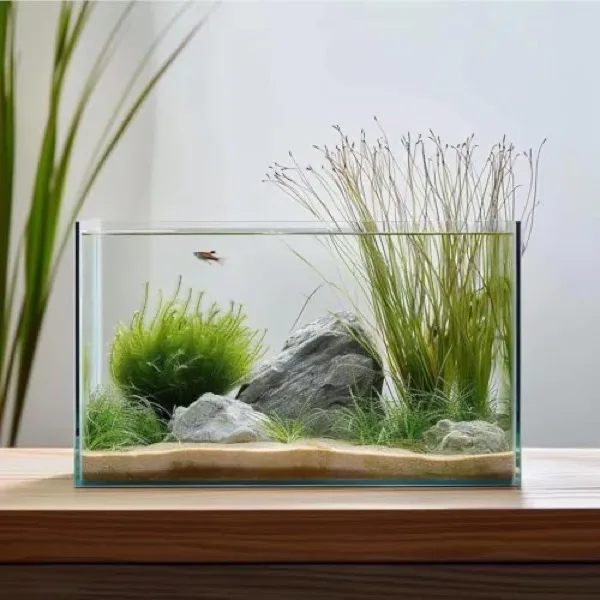
A budget 3-gallon glass tank for a single betta in a warm room; add a small heater and keep the flow gentle.
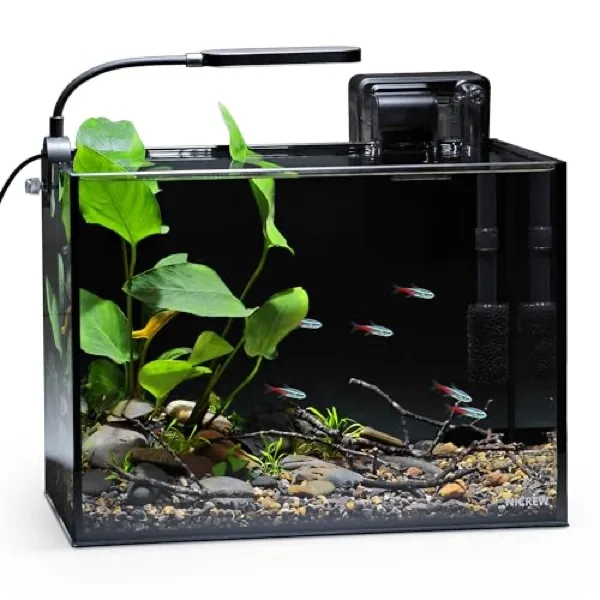
Our catalog 2.5-gallon nano pick, the practical minimum when space and budget are tight.
The 5-gallon sweet spot: a rimless-style kit with a filter and light in the box, so you only add a heater.
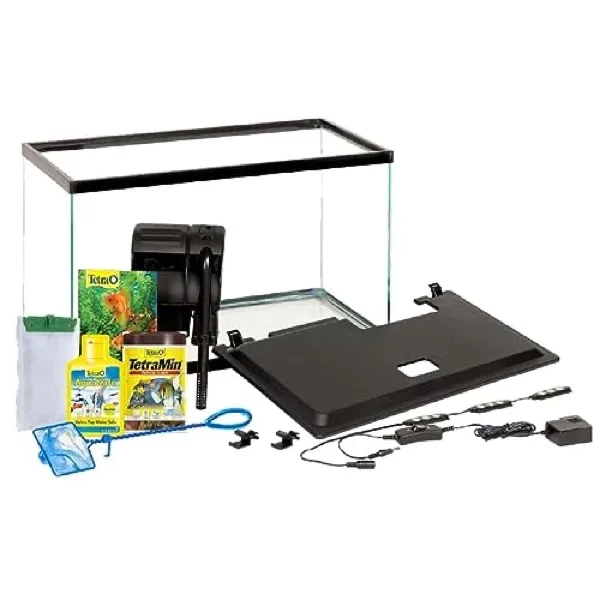
Step up to 10 gallons for tankmates or a planted display; the extra water makes everything more forgiving.
We did not buy and test these tanks; we compared the kits owners actually keep bettas in, the equipment each includes, and the reviews each has earned. The picks below span the ladder from a budget nano up to a 10-gallon.
For a single betta in a warm room, a small glass tank keeps the footprint and the price down.
For the sweet-spot five gallons, a rimless-style kit gives you a filter and light in the box, so you only add a heater.
Step up to ten gallons when you want tankmates or a planted display, and the extra water makes everything more forgiving.
When you compare kits, look past the picture on the box at three things: whether a filter is included and whether its flow can be turned down, whether a lid keeps a jumping betta in, and whether the kit admits it has no heater. A low price that leaves out the heater is not really cheaper, because you will buy one anyway. Clear glass, a gentle adjustable filter and a secure lid are worth more than an extra plastic plant or a color-changing light.
Glass over acrylic for most people. Glass does not scratch the way acrylic does when you clean algae, and it stays clear for years. Acrylic is lighter and harder to crack, which is the trade for scratches.
What every betta kit leaves out
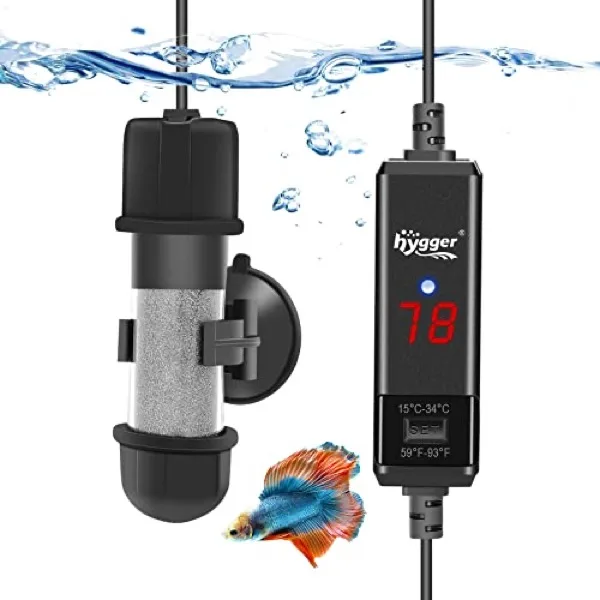
A small, adjustable heater is the add-on that matters most; this one is sized for nano and 5-gallon betta tanks.
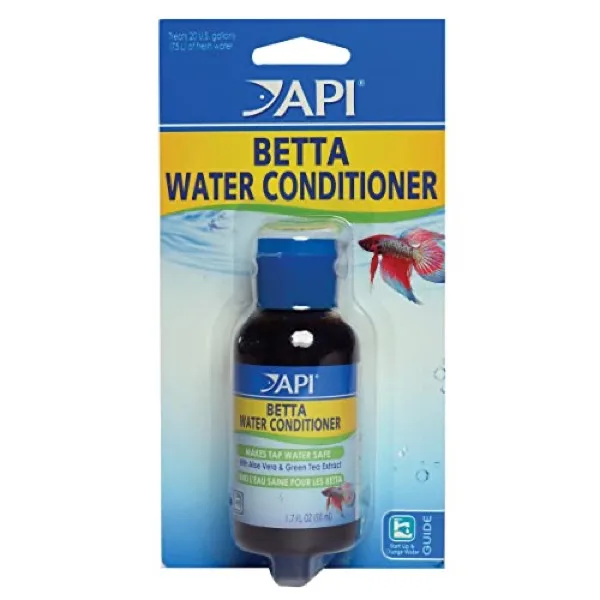
Removes chlorine and chloramine from tap water; use it at every top-up and water change.
Here is the part the box rarely mentions. A betta is a tropical fish that needs a steady, warm temperature, so the heater is the add-on that matters most, and most kits do not include one. Seriously Fish lists the species at 22 to 30 °C (72 to 86 °F); a room at 20 °C is too cold, and a betta kept cold becomes sluggish and prone to illness. A small, adjustable heater fixes it.
The second miss is a water conditioner to remove the chlorine and chloramine in tap water, which you use at every top-up and water change. The third is a test kit so you can see the ammonia and nitrite swing while the tank cycles, before it harms the fish.
Buy the heater with the tank, not later. The cold weeks are exactly when a new betta is most stressed, so size a small heater for the tank and have it running before the fish goes in.
Betta fish tank setup in 6 steps
- Rinse the tank, substrate and decor in plain water, never soap.
- Fill it, add a dose of water conditioner, and install the filter and heater.
- Set the heater to hold 25 to 27 °C (77 to 80 °F) and let it run a day to confirm.
- Cycle the tank before any fish: add an ammonia source and a bacteria starter, and test until ammonia and nitrite read zero. Our fishless cycle guide walks through it.
- Acclimate the betta slowly by floating the bag and mixing in tank water over 20 to 30 minutes.
- Feed lightly, with the right betta food, and change about 25 percent of the water each week.
What betta fish like in their tank
Bettas are territorial but not strong swimmers, and their long fins tire in a current. Aim for gentle flow: a baffled filter output or a sponge filter keeps the surface calm. Give them cover and rest with live or silk plants (avoid hard plastic plants that tear fins) and a smooth cave or a floating betta log. A lid matters too, since bettas are jumpers. Keep the light on a timer and the temperature steady, and a betta will color up and build the odd bubble nest when it is content.
Can two bettas share a tank?
No, not two males. Male Betta splendens are named "Siamese fighting fish" for a reason and will fight, often to the death, so one male per tank. Females can sometimes be kept in a larger, well-planted "sorority," but it is an advanced setup with real risk and is not a beginner move. In a 10-gallon you can instead add peaceful, non-nippy tankmates such as a few small bottom-dwellers, with plenty of plants to break up sight lines.
Sources and method
We researched and compared kits, equipment and community consensus rather than lab-testing tanks. Betta temperature and pH ranges are from Seriously Fish, Betta splendens (22 to 30 °C / 72 to 86 °F, pH 6.0 to 8.0), not folklore. Included-equipment details are from each kit's manufacturer listing. Prices were checked on the publish date and can move.
A heated, filtered 5-gallon glass tank is the betta setup that pays off: stable water, easy to plant and the sweet spot between a cramped bowl and a big build. Drop to 2.5 to 3 gallons only in a warm room, step up to 10 for tankmates, and buy the heater with the tank, since it is the one thing nearly every kit leaves out.
Common questions
How big of a tank do betta fish need?
Five gallons is the size most experienced keepers recommend, because the larger water volume holds a steady temperature and dilutes waste. A 2.5 to 3 gallon tank is the practical minimum in a warm room, and bowls under about 2 gallons make stable water very hard.
Do betta fish need a heater?
Yes. Bettas are tropical fish; Seriously Fish lists them at 22 to 30 C (72 to 86 F). A room at 20 C is too cold and leaves a betta sluggish and prone to illness, so size a small adjustable heater for the tank and have it running before the fish goes in.
Can two betta fish live in the same tank?
Not two males, which will fight, often to the death, so keep one male per tank. Female sororities are possible in a larger planted tank but are an advanced setup with real risk. In a 10-gallon you can instead add a few peaceful, non-nippy tankmates.
How often should I change a betta tank's water?
About 25 percent of the water once a week in a cycled 5-gallon, always with a dose of water conditioner for the fresh water. Smaller tanks need changes more often because waste concentrates faster.