Sponge vs HOB Filter for a 20-Gallon Tank: Which to Use
Sponge vs hang-on-back filter for a 20-gallon: a HOB wins for most community tanks, a sponge for shrimp, fry and bettas. The deciding line.
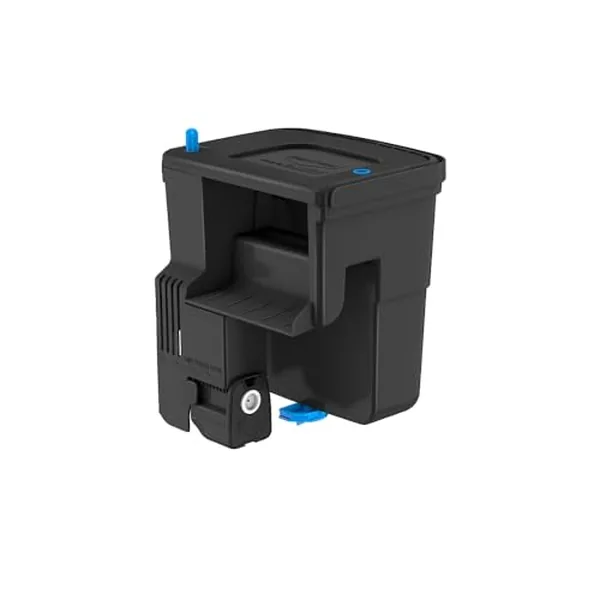
For a standard community 20-gallon, a hang-on-back (HOB) like the Seachem Tidal is the better default — more filtration, easier to service, and it takes bulk media. A sponge filter wins for shrimp, fry, bettas, quarantine tanks, and as a silent, dirt-cheap backup: it is gentle and biological, but it will not polish water or run a chemical stage.
| Product | Score | Filtration Performance | Maintenance & Access | Noise & Flow | Owner Satisfaction | Value | Buy |
|---|---|---|---|---|---|---|---|
| Seachem Tidal 35 Power Filter Seachem · mid-range | 84 | 93 | 96 | 85 | 75 | 77 | Buy → |
| AQUANEAT Bio Sponge Filter AQUANEAT · budget | 89 | 85 | 94 | 88 | 88 | 88 | Buy → |
| Tetra Whisper IQ 130 GPH Power Filter Tetra · budget | 74 | 83 | 71 | 77 | 58 | 84 | Buy → |
The short version
Both will keep a 20-gallon alive — the question is what fish. A hang-on-back (HOB) is the plug-and-play default for a community tank: it does mechanical, chemical and biological filtration and is easy to service. A sponge filter is biological and mechanical only, but it is gentle, silent and cheap — which is exactly what shrimp, fry and bettas want. Match the filter to the livestock, not the other way round.
What a HOB does better
An HOB pulls water up through a media chamber, so you get all three kinds of filtration in one unit — including a chemical stage (carbon or Purigen) and fine mechanical polishing that clears cloudiness a sponge cannot. On a good HOB like the Seachem Tidal you also get a surface skimmer, adjustable flow, and a basket you fill with your own bulk media. For a normally-stocked community 20 with tetras, corys or a mix, that is the better all-round tool. Size for roughly 100 GPH — about 5x turnover.
What a sponge does better
A sponge filter is driven by an air pump, so its flow is soft and even — it will not pin a betta against the intake or suck up baby shrimp and fry, the way an HOB intake can. It is almost silent, it is nearly impossible to break, and it costs a few dollars. It is also a superb biological filter: the whole sponge is bacteria habitat. What it cannot do is run carbon or finely polish the water.
Flow is the real deciding factor
This is the line that decides it. Shrimp, fry, bettas and anything long-finned want the gentle, safe flow of a sponge (or an HOB with a pre-filter sponge on the intake and the flow turned down). A standard community tank benefits from the stronger circulation and polishing of an HOB. If you keep shrimp and messier fish, many keepers run both: an HOB for the water column and a sponge for gentle extra biology.
Cost and noise
A sponge plus a cheap air pump is the least expensive filtration in the hobby, and it has no proprietary cartridge to rebuy — you just rinse the sponge. Its only noise is the air pump, which you can quiet with an air-line valve or by placing the pump on foam. An HOB is pricier and has a faint waterfall trickle, but no separate pump.
What keepers run
Community consensus (the r/Aquariums 20-gallon threads) lands almost exactly here: an HOB as the main filter for a community tank, a sponge for shrimp, fry, bettas and hospital/quarantine tanks, and a sponge as a cheap, always-ready backup that is also a great way to cycle a new filter.
Bottom line
Standard community 20? Get a HOB — the Seachem Tidal if you want the best, the Tetra Whisper if you want cheap and quiet. Shrimp, fry, a betta, or a quarantine tank? Get a sponge (the AQUANEAT), or pair one with your HOB. It is less a rivalry than a division of labour.
For a community 20-gallon, use a HOB (the Seachem Tidal) as the main filter; choose a sponge for shrimp, fry, bettas or a quarantine tank, or run one alongside the HOB as a gentle, silent backup.
Common questions
Can you use a sponge filter and a HOB together?
Yes, and many keepers do. Running a sponge alongside a hang-on-back adds gentle biological filtration and a silent backup if the HOB fails, and it seeds a filter for a future tank. It is a cheap, low-effort way to add stability to a 20-gallon.
Is a sponge filter enough for a 20-gallon community tank?
It can be, but it is working near the top of its range. A single sponge suits a lightly stocked 20-gallon, a shrimp tank or a fry tank; a busy community with messier fish benefits from a HOB, which moves more water and adds mechanical polishing. Two sponges also add headroom.
Do sponge filters need an air pump?
Yes. A sponge filter is air-driven, so it needs a small air pump and airline tubing, both bought separately. Rising bubbles pull water through the sponge. Some can run off a powerhead instead, but the air-pump setup is the usual and quietest option.