Best Filter for a 5-Gallon Tank: Nano, Betta and Shrimp
The best filter for a 5-gallon tank: a gentle sponge for bettas and shrimp, or a small adjustable HOB, plus how to size flow for a nano tank.
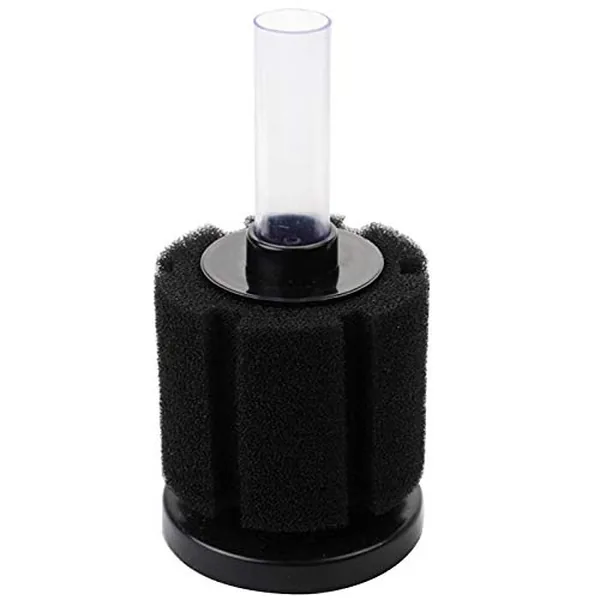
For most 5-gallon tanks a sponge filter is the right default: it is gentle, silent, biological and cheap, which suits the bettas, shrimp and nano fish that a 5-gallon actually holds. If you want a hang-on-back instead, pick a small one with adjustable flow like the Marina S20 and turn it down. The mistake to avoid is a 130 GPH power filter run wide open, which turns a 5-gallon into a washing machine.
| Product | Score | Filtration Performance | Maintenance & Access | Noise & Flow | Owner Satisfaction | Value | Buy |
|---|---|---|---|---|---|---|---|
| AQUANEAT Bio Sponge Filter AQUANEAT · budget | 89 | 85 | 94 | 88 | 88 | 88 | Buy → |
| Tetra Whisper IQ 130 GPH Power Filter Tetra · budget | 74 | 83 | 71 | 77 | 58 | 84 | Buy → |
| Marina S20 Power Filter Marina · budget | 70 | 67 | 64 | 84 | 56 | 84 | Buy → |
The short version
A 5-gallon is a nano tank, and the fish it suits are bettas, shrimp and small schoolers that hate current. That single fact decides the filter. You want gentle biological filtration, not the highest GPH you can buy.
There are two sensible routes: an air-driven sponge filter, or a small hang-on-back (HOB) with the flow turned down. Both appear in the comparison above; here is when each wins.
Match the flow, not the box rating
Most power filters are labelled "up to 20 gallons," which tells you nothing useful on a 5-gallon. What matters is turnover: how many times the filter cycles the whole tank per hour.
| Turnover | Effective flow on 5 gal | Feel |
|---|---|---|
| 4-6x / hour | ~20-30 GPH | Calm, betta-safe |
| 8-10x / hour | ~40-50 GPH | Brisk; baffle it |
| 25x+ / hour | 130 GPH wide open | A washing machine |
An air-driven sponge sits naturally at the calm end. A small HOB like the Marina S20 runs 43 GPH and adjusts down into range. A 130 GPH filter such as the Tetra Whisper IQ works only once you baffle the outflow.
Why a sponge filter is the default
The AQUANEAT sponge filter is the pick for most 5-gallon keepers, and not only because it costs under ten dollars. It is gentle by design, near silent, and the sponge is reusable, so there is no recurring cartridge cost. It also doubles as a pre-filter and a quarantine-tank filter later on.
- Best for: bettas, shrimp, fry, snails, nano schoolers
- Needs: a small air pump and airline (bought separately)
- Trade-offs: it sits inside the tank, and it does no chemical stage, so it will not polish water or remove tint
For a shrimp tank in particular, a sponge is not a compromise. It is the recommended filter, because it cannot suck in shrimplets.
When to choose a small HOB instead
If you want the tidier look of a hang-on-back and a bit of mechanical polishing, the Marina S20 is the gentlest option here. Run it on its lowest flow setting and slip a pre-filter sponge over the intake to protect fins and shrimp.
Be aware of the cartridge model: HOBs like the Marina and the Tetra use proprietary cartridges that you are meant to replace, which is a small but real running cost. You can sidestep most of it by rinsing and reusing the cartridge until it falls apart and adding your own filter floss.
Setting it up
Whatever you choose, cycle the tank before adding fish so the filter grows its bacteria first. Our fishless cycling guide walks through it, and if you are keeping a betta, this covers the heater question too.
On a 5-gallon, start with a sponge filter (the AQUANEAT) run off a small air pump: gentle, silent and effectively free to maintain. Choose the Marina S20 only if you specifically want a hang-on-back, and run it on its lowest flow with a pre-filter sponge over the intake.
Common questions
Does a 5-gallon tank even need a filter?
Yes. A filter houses the beneficial bacteria that process fish waste, and 5 gallons of water is a small, easily polluted volume. A sponge filter is enough, but running no filter at all means relying on frequent large water changes to keep ammonia down, which is far riskier for the fish.
What GPH should a 5-gallon filter be?
Aim for roughly 4 to 6 times the tank volume per hour, so about 20 to 30 GPH of effective flow. An air-driven sponge sits comfortably in that range, and a small adjustable HOB like the Marina S20 (43 GPH) can be turned down to it. A 130 GPH filter is not wrong, but it needs its flow baffled for a nano tank.
Will a hang-on-back filter be too strong for a betta?
Often, yes, at full flow. Bettas have long fins and are weak swimmers, so a strong outflow stresses them. Use a filter with adjustable flow, turn it down, and break the current with a pre-filter sponge or by aiming the outflow at the glass.