Aquarium Salt for Betta Fish: When, How Much, Chart
Aquarium salt for betta fish is a short-term treatment, not a daily additive. See the dose per gallon, when it helps, and when to skip it entirely.
Aquarium salt for betta fish is a short-term tonic and treatment aid, not a daily additive. API's label dose is one half teaspoon per U.S. gallon (or one rounded tablespoon per five gallons), dissolved first and added only with a water change, since salt does not evaporate or filter out. Use it deliberately for a short course, and for a seriously ill betta see an aquatic vet rather than adding more salt.
We earn a commission if you buy through Amazon links. It never changes the score. How we make money.
Aquarium salt for betta fish is one of the most misunderstood products in the hobby. It is a short-term tonic and treatment aid, not a daily additive you dose into the tank forever. Used at the label rate for a specific reason, it can help; used routinely "just in case," it is at best pointless and at worst hard on a betta's slime coat and any plants or snails sharing the tank. This guide gives the dose by tank size straight from the manufacturer's label, explains when it actually helps, and is just as clear about when to skip it and call a vet instead.
What aquarium salt does, and what it doesn't
Aquarium salt is sodium chloride, the same basic compound as the salt in the sea, sold without the anti-caking agents and iodine added to table salt. In a freshwater tank a modest dose can support a fish's gill function and act as a general stress aid and mild external treatment. That is the whole of it.
What it does not do is treat everything. It is not a cure for most diseases, it does not replace clean water and a cycled tank, and it is not something a healthy betta needs in its water day to day. Betta keepers argue about salt precisely because so many pages present a niche treatment as routine care. The honest position: reach for it deliberately, at the label dose, for a short course, and otherwise leave it out.
One quirk matters for dosing. Salt does not evaporate and is not removed by your filter, so it stays in the tank until you physically take water out. API's label is explicit that the salt "should only be added with each water change," meaning you dose only the new water you add, never the whole tank again. Topping off for evaporation needs no new salt at all.
Aquarium salt dosage chart by tank size
The dose below is API's own label rate of one half teaspoon per U.S. gallon, scaled to common betta tank sizes. Measure to the water volume you are actually replacing, not the tank's rated size.
| Tank size | API Aquarium Salt (at 1/2 tsp per gallon) |
|---|---|
| 1 gallon | 1/2 teaspoon |
| 2.5 gallons | 1 1/4 teaspoons |
| 5 gallons | 2 1/2 teaspoons (about 1 rounded tablespoon) |
| 10 gallons | 5 teaspoons (1 tablespoon + 2 teaspoons) |
| 20 gallons | 3 tablespoons + 1 teaspoon |
| 29 gallons | about 4 3/4 tablespoons |
The label gives two equivalent rates, one half teaspoon per gallon or one rounded tablespoon per five gallons. The tablespoon version runs marginally stronger, so for a betta, which does not need a heavy dose, the per-gallon rate above is the gentler read.
Salt does not leave with evaporation. Because it stays behind, you only add salt for the water you remove and replace. Re-dosing the whole tank on top of water that is already salted is the most common way people accidentally overdose a betta.
How to add it without overdosing
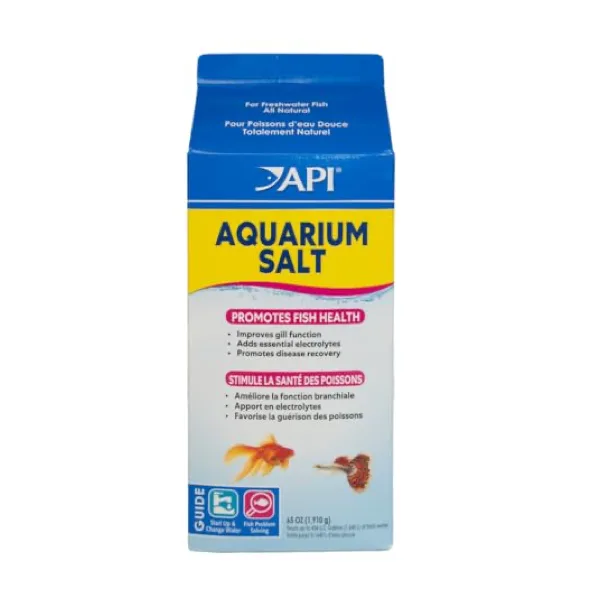
The standard sodium-chloride aquarium salt; dose at the label rate of half a teaspoon per gallon, dissolved in tank water first.
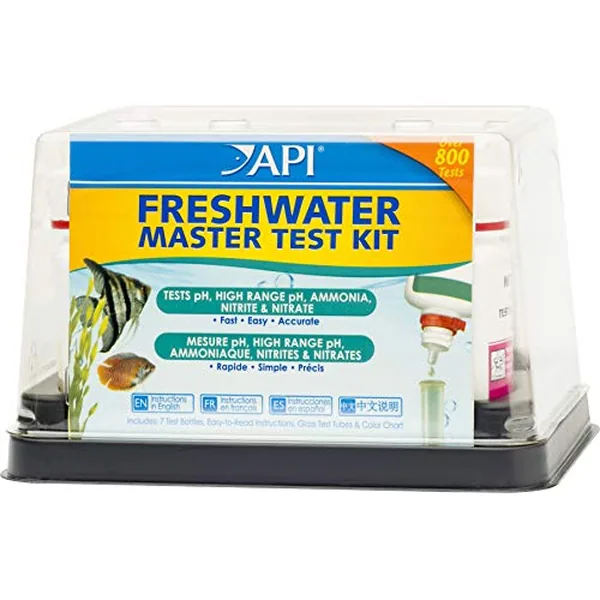
Test the water before you dose anything; most betta problems are water-quality issues that salt will not fix.
Never pour salt straight into the tank, where it lands on the substrate and on the fish. Dissolve the measured dose fully in a cup of tank water first, then add the solution slowly to the tank or, better, to the fresh water of a water change. Our water-change calculator helps you figure the exact volume you are replacing so you salt only that.
Before you dose anything, test the water. A tank that is greening the glass or stressing a fish is far more often a water-quality problem than something salt will fix, and a test kit tells you in minutes. Our guide to aquarium water parameters explains what the numbers mean.
Aquarium salt for betta fish: when it helps, and when to see a vet
Salt at the label dose is reasonable as a short-term stress aid after a hard move, or as a mild supportive treatment for minor external issues, alongside the real fix, which is clean, warm, stable water. Think of it as support, not medicine.
It is not the answer for a seriously ill betta. Signs like a swollen, pinecone-like body (dropsy), rapid breathing, refusing food for days, or an infection that is spreading call for a proper diagnosis and often a targeted medication, not more salt. Dosing salt for disease beyond the general label rate is genuinely easy to get wrong, and the responsible step is to consult an aquatic veterinarian or an experienced fishkeeping resource rather than guess at a treatment concentration. When in doubt, change water and get advice, do not keep adding salt.
Before you reach for salt, get the basics right
Salt is a distant fallback, not a first move. The vast majority of betta problems are water problems, and no amount of salt fixes a tank that is too cold, uncycled or overdue for a change. A betta needs a heated, filtered tank of a few gallons before any treatment is worth trying; our guide on whether bettas need a heater and filter covers that foundation.
Equally, a regular water-change routine does more for a betta's health than salt ever will, because it is what keeps ammonia and nitrite from building up in the first place. If you are unsure how much or how often, see how often to change aquarium water. Dial those two things in, and most of the reasons people reach for salt simply stop happening.
Aquarium salt vs Epsom salt (and table salt)
These three are not interchangeable, and mixing them up is a common mistake.
| Salt | What it is | Use in a betta tank |
|---|---|---|
| Aquarium salt | Sodium chloride, no additives | Short-term tonic and mild external aid at the label dose |
| Epsom salt | Magnesium sulfate, a different compound | Sometimes used as a short-term bath for bloating or swim-bladder issues; dose on advice, not routine |
| Table salt | Sodium chloride plus anti-caking agents and usually iodine | Avoid; the additives are unnecessary and can stress fish |
The key point: aquarium salt and Epsom salt do different jobs because they are different chemicals, and table salt is simply the wrong product. For any Epsom-salt bath, follow a reliable, species-specific source rather than a generic number.
Plants, snails and shrimp
Salt is not friendly to everything in a planted or community tank. API's own label cautions that "care should be taken when using salt with live plants, as some plants may be sensitive." Many popular aquarium plants will show damage at treatment doses.
Invertebrates are more sensitive still. Snails and shrimp tolerate far less salt than fish, and a dose that is mild for a betta can harm or kill them. If your betta shares its tank with plants, snails or shrimp, the safest route is to treat the fish in a separate container rather than salting the display tank. This is another reason salt belongs in the short-term-treatment toolbox, not the daily routine.
Sources
- API Aquarium Salt product label, apifishcare.com: the dose of one half teaspoon per U.S. gallon (or one rounded tablespoon per five gallons), the instruction to add salt "only with each water change," and the caution that some live plants may be sensitive to salt.
- Manufacturer product listings for the test kit and water conditioner referenced above.
Treat aquarium salt as an occasional tool, not part of a betta's daily water. Dose at the label rate of half a teaspoon per gallon, dissolved first and only in the water you replace at a change, for a short course and a specific reason. It supports a stressed fish; it does not cure disease, and it can harm plants, snails and shrimp. Get the tank warm, filtered and regularly changed first, and you will rarely need the salt at all.
Common questions
How much aquarium salt per gallon for a betta?
API's label dose is one half teaspoon of aquarium salt per U.S. gallon, or one rounded tablespoon per five gallons. Dissolve it in a cup of tank water first, and add it only to the fresh water of a water change, since salt stays in the tank until you remove water.
What does aquarium salt do for a betta?
At the label dose it can support gill function and act as a mild stress aid and external treatment for minor issues. It is not a cure for most diseases and is not something a healthy betta needs in its water day to day.
Is aquarium salt the same as Epsom salt?
No. Aquarium salt is sodium chloride, while Epsom salt is magnesium sulfate, a different compound used for different purposes such as a short-term bath for bloating. Table salt is also different and should be avoided because of its additives.
Will aquarium salt kill plants, snails or shrimp?
It can. API's label cautions that some live plants are sensitive to salt, and invertebrates like snails and shrimp tolerate far less than fish. If your betta shares its tank with plants, snails or shrimp, treat the fish in a separate container instead of salting the display tank.