Best test kits
Independent rankings of freshwater aquarium water test kits by accuracy, cost per test and ease of reading — liquid kits vs strips.
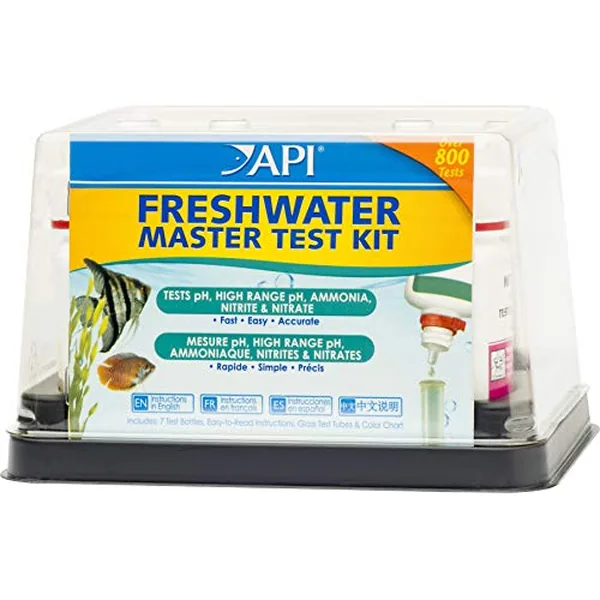
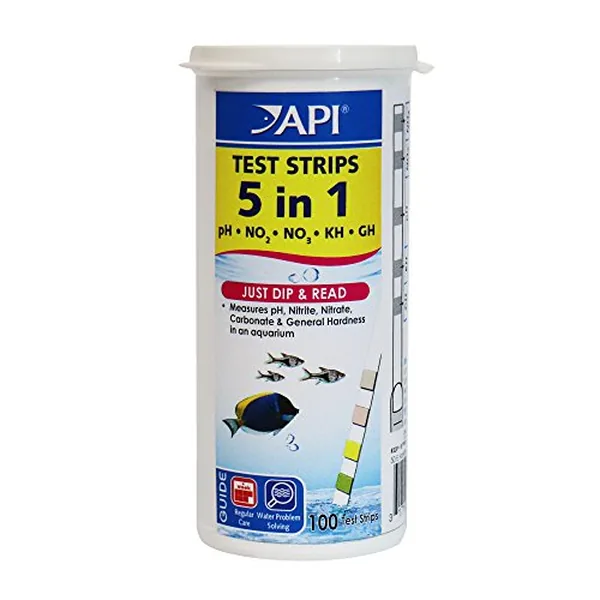
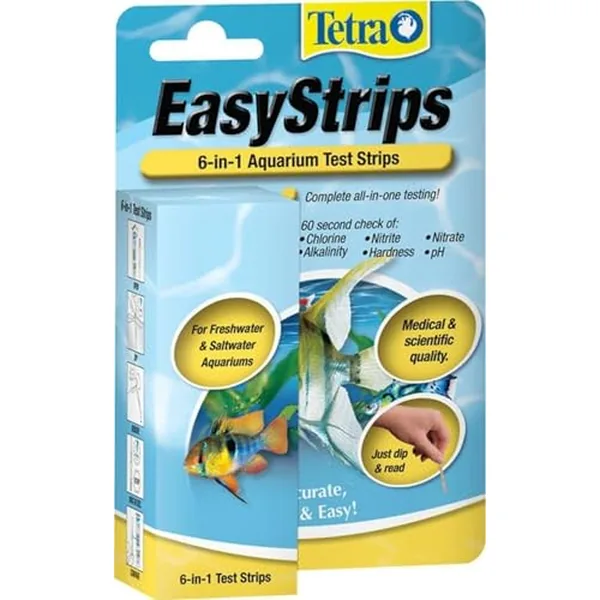
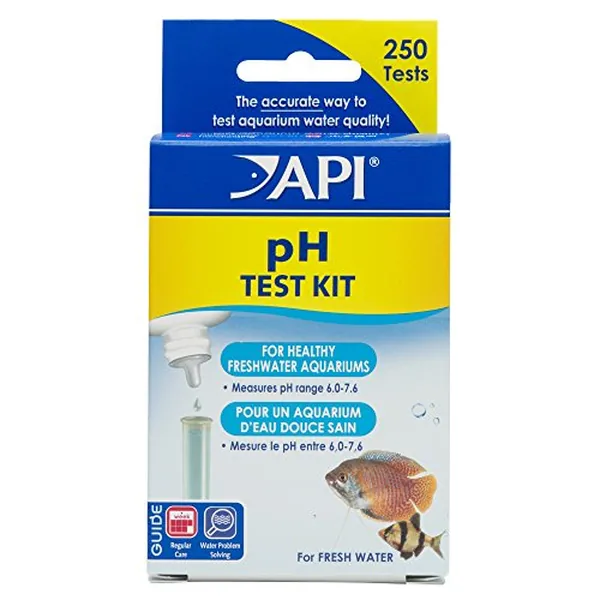
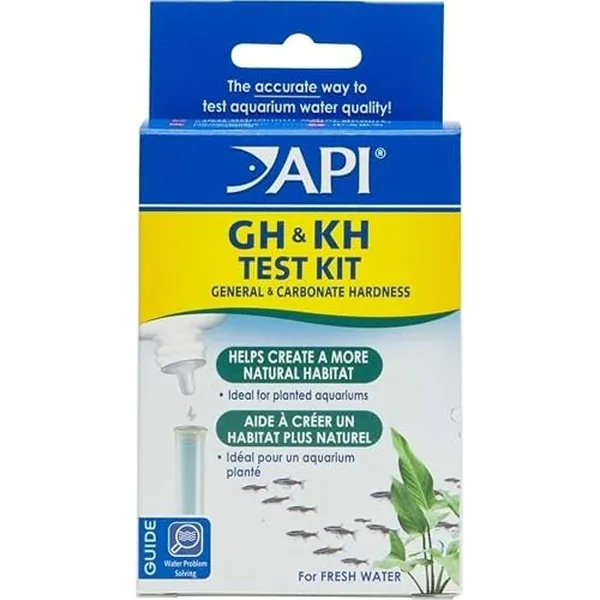
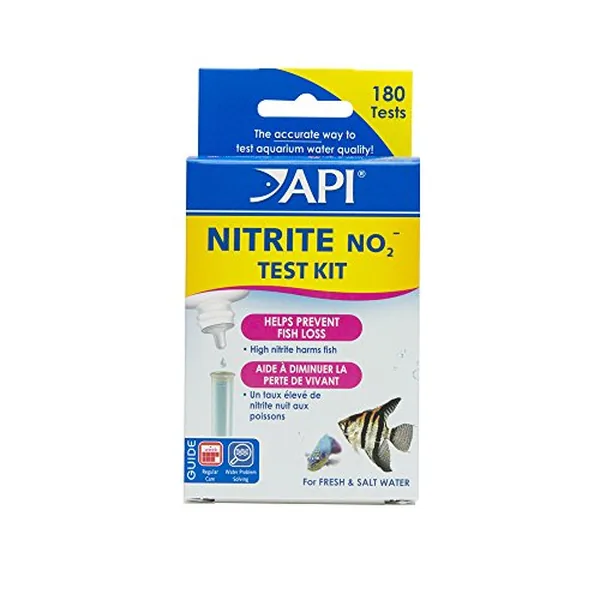
Buy the API Freshwater Master Test Kit. It is the accuracy reference for freshwater — liquid reagents read a real number where strips only give a ballpark, and it covers the whole ammonia-nitrite-nitrate cycle plus pH. Want faster and cheaper? The API 5-in-1 strips (or Tetra EasyStrips) are fine for a routine weekly glance, just not for diagnosing a problem. Cycling a new tank or keeping shrimp? Add the single-parameter API Nitrite or GH & KH kit. The one rule: test ammonia and nitrite while a tank is cycling, and never trust a strip to tell you a tank is safe.
API Freshwater Master Test Kit
The accuracy reference for freshwater: a liquid reagent kit that reads far more granular than strips and covers the full ammonia nitrite nitrate cycle plus high- and low-range pH.
The rest, ranked
Test Kits guides
Community consensus
Community consensus is close to unanimous that liquid kits beat strips for accuracy, and that the API Freshwater Master is the default freshwater kit despite its fiddly multi-step routine. Keepers repeatedly warn that strips read high or vague at low ranges, stress shaking bottle #2 of the nitrate reagent hard, and note that reagents drift once they are a few years old — check the batch date before trusting an old kit.
- r/Aquariums — liquid vs strips accuracy threads
- Aquarium Co-Op forum
- FishLore
What we didn't pick
- Seachem Ammonia Alert / Multi Testconsidered 2026-08-13
The stick-on Ammonia Alert badge is a handy always-on warning, but it is a coarse indicator rather than a numbered test, and the Seachem multi tests are pricier and more finicky than the API liquids for a freshwater beginner. Useful as a backup, not our primary pick.
- Digital / electronic photometers (e.g. Hanna checkers)considered 2026-08-13
Genuinely accurate and fast, but priced well outside this consumables tier and mostly single-parameter — overkill for a freshwater community tank. We may cover them separately for reef and high-tech planted keepers.
Buying guide
Liquid vs strips: accuracy is the whole game
The decided question in this category is "liquid or strips?", and the answer is liquid for anything that matters. A liquid reagent kit gives you a number you can act on; a strip gives you a colour block that lands somewhere in a range. Strips are fine for a quick weekly "is anything obviously wrong?" glance — they are faster and cheaper per box — but they read vague at the low end and many skip ammonia entirely, which is the one reading you cannot afford to miss on a new tank.
| Situation | What to test | Best tool |
|---|---|---|
| Cycling a new tank | Ammonia, nitrite, nitrate daily | Liquid (Master, or single ammonia/nitrite) |
| Established tank, routine | pH, nitrate every 2–4 weeks | Strips are fine for the glance |
| Planted / shrimp tank | GH, KH (and pH) | Liquid GH & KH titration |
| Chasing a problem | Whatever is off, precisely | Liquid, always |
Why you test at all: the nitrogen cycle
A tank keeps fish alive by growing bacteria that convert toxic ammonia to nitrite and then to far less toxic nitrate. Until that bacterial colony is established — the first month of a new tank — ammonia and nitrite spike to lethal levels with nothing visible in the water. Testing is the only way to see it. That is why the single most valuable kit for a beginner is a liquid ammonia or nitrite test, and why we rank the all-in-one Master kit first.
Cost per test, not price on the shelf
A $36 Master kit looks dear next to a $15 tube of strips, but it runs to roughly 800 tests and its reagents are sold as individual refills. Do the arithmetic per test and the liquid kit is usually the cheaper habit within a year, the same way a refillable filter media beats a proprietary cartridge. Buy the reagent refill, not a whole new kit, when a bottle runs low.
Reading the result
The two things that trip people up: read the colour card in natural daylight, not under an aquarium light that tints everything, and shake the nitrate second bottle hard for 30 seconds — under-shaking it is the most common cause of a falsely low nitrate reading. Reagents also drift with age; if a kit has sat for a few years, its numbers are suspect and it is worth replacing.
Sources
- Best Aquarium Test Kits — why liquid reagents beat strips, with API Master as the freshwater pick — Aquarium Store Depot (review authority)
- The nitrogen cycle — nitrifying bacteria convert ammonia to nitrite to nitrate; ammonia and nitrite are the toxic stages you test for — Aquarium Science (reference authority)
- API Freshwater Master Test Kit — measures pH, high-range pH, ammonia, nitrite and nitrate with liquid drops and a laminated colour card — API / Mars Fishcare (manufacturer)
- Aquarium Water Testing — what to test and how often, from daily during cycling to every few weeks once established — Aquarium Co-Op (community / how-to authority)
Some links are affiliate links; they never change our rankings.