Seachem Flourite Black
A porous fired-clay gravel that holds root tabs and nutrients and never breaks down, so it is the one planted substrate you buy once. Inert, so you supply the nutrients, and it needs a thorough rinse.
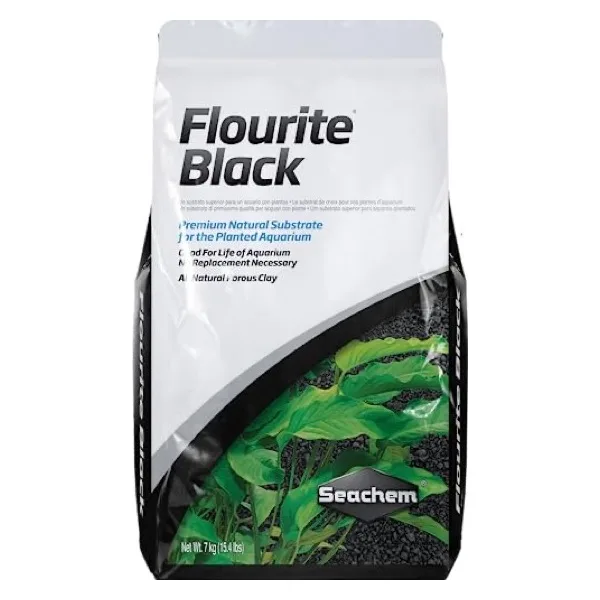
We earn a commission if you buy through Amazon links. It never changes the score. How we make money.
- +Porous clay holds root tabs and liquid nutrients at the roots
- +Permanent and reusable: it never breaks down or runs out
- +Natural black look that makes fish and plants pop
- +Grows demanding plants when you dose ferts
- −Inert, so you must supply nutrients with root tabs and ferts
- −Needs lots of rinsing and is very dusty out of the bag
- −Heavier and sharper-edged than aquasoil
This is Seachem Flourite Black, a porous fired-clay gravel for planted aquariums. It is inert, so it does not alter pH or release nutrients, but its porous structure holds root tabs and liquid fertiliser at the root zone, and because it is baked clay it never breaks down.
- Planted keepers who want a substrate they buy once and keep forever
- Anyone who already doses liquid ferts or uses root tabs
- Tanks where a permanent, non-buffering bed is wanted
- Aquascapes that want a natural dark gravel look
- Beginners who want nutrients built in, where an aquasoil is easier
- Anyone unwilling to rinse thoroughly before setup
- Shrimp keepers wanting a pH-buffering bed
- Soft-bellied burrowers that prefer fine sand
We separate what the maker claims from what independent sources confirm, what owners report, and where we are drawing an inference. We do not bench-test products.
- Inert porous fired-clay gravel
- Does not alter pH or hardness
- Holds nutrients at the roots
- 15.4 lb (7 kg) bag
- It is inert, not a nutrient soil
- The clay is porous, so it holds root tabs and ferts
- It does not break down over time
- A long-standing planted-tank favourite for being permanent and never needing replacement, unlike aquasoil
- The universal warning is to rinse it very thoroughly, since it is extremely dusty and will cloud the tank badly otherwise
- The appeal is the opposite of aquasoil: nothing to deplete and nothing to replace, at the cost of supplying nutrients yourself
- Budget an hour of rinsing at setup and it rewards you with a bed that lasts the life of the tank
A higher one-time cost than aquasoil, then effectively nothing: it never depletes or breaks down, so there is no replacement cost. The ongoing spend is the root tabs and liquid ferts you dose, since the clay itself is inert.
- Clouds the tank badly if not rinsed thoroughly first
- Grows nothing on its own until you add root tabs or dose ferts
- Sharper, heavier grains are less kind to soft-bellied fish than sand
- Fine dust can clog a filter in the first days if you skip rinsing
We do not bench-test substrate. Figures are the manufacturer's stated specs and the listing alongside aggregated owner feedback. We give gear guidance only, not plant-keeping or water-chemistry advice.
Yes, thoroughly. It is very dusty out of the bag and will cloud the tank for days if you do not rinse it well first. Rinse until the water runs mostly clear.
No. It is inert and does not release nutrients or change pH. It holds the nutrients you add through root tabs and liquid fertiliser at the roots.
No. It is fired clay that does not break down, so unlike aquasoil it never runs out or needs replacing, which is its main selling point.
Choose Flourite for a permanent bed you dose yourself; choose Fluval Stratum for built-in nutrients and easy early growth that you top up with root tabs later.