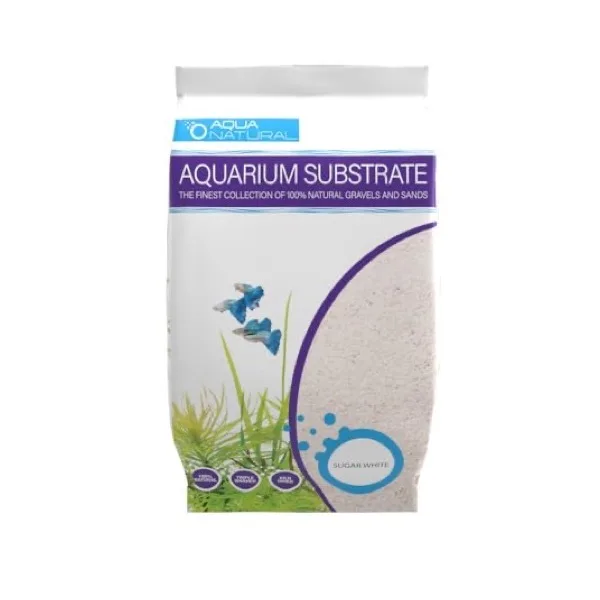
Aqua Natural Sugar White Sand
A fine, bright white inert sand for a clean aquascape, soft enough for corydoras and other burrowers. Inert and pH-neutral, so dose for plants, and keep the bed shallow since fine sand can compact.
We earn a commission if you buy through Amazon links. It never changes the score. How we make money.
- +Fine, bright white grain for a clean, modern aquascape
- +Soft and rounded, gentle on corydoras and other burrowers
- +Inert and pH-neutral, so it suits most community tanks
- +Good value for a natural aquarium sand
- −Inert, so it adds no nutrients for plants
- −Fine sand can compact in a deep bed and clouds if stirred, and shows detritus
This is Aqua Natural Sugar White Sand, a fine, bright-white inert aquarium sand. It is pH-neutral and soft, which makes it a popular choice for a clean modern aquascape and for tanks with corydoras and other fish that sift or burrow in the substrate.
- A bright, clean aquascaped look
- Tanks with corydoras, loaches or other burrowers
- Community tanks that want a neutral, non-buffering bed
- Keepers who want sand rather than gravel on a budget
- Planted keepers wanting nutrients built in
- Deep beds, since fine sand compacts and can go anaerobic
- High-flow tanks that will blow light sand around
- Anyone who dislikes seeing detritus sit on a pale bed
We separate what the maker claims from what independent sources confirm, what owners report, and where we are drawing an inference. We do not bench-test products.
- Inert aquarium sand
- Bright white colour
- Fine grain
- 10 lb bag
- It is inert and pH-neutral
- The grain is fine, soft sand
- It is marketed for aquascaping and bottom-dwellers
- Praised for its clean white look and for being soft on corydoras barbels, with a high owner rating
- Owners note the usual sand trade-offs: it shows debris, clouds if stirred, and should be kept shallow to avoid compacting
- A good-value way to get the bright-sand aquascape look with a substrate that is kind to bottom-dwellers
- Keep it shallow, stir it gently at water changes, and add root tabs if you plant it
A low one-time cost per 10 lb bag; buy for the footprint. Ongoing cost is only root tabs if you plant it. Maintenance is a little higher than gravel, since detritus shows and a shallow sand bed benefits from gentle, regular surface cleaning.
- Compacts and can go anaerobic in a deep bed, so keep it shallow
- Clouds the water if stirred hard, and shows detritus on its pale surface
- Light grains blow around under strong filter flow
- Inert, so plants need added root tabs
We do not bench-test substrate. Figures are the manufacturer's stated specs and the listing alongside aggregated owner feedback. We give gear guidance only, not plant-keeping or water-chemistry advice.
Yes. Its fine, soft, rounded grain is gentle on corydoras barbels, which is a common reason to choose sand over sharp gravel.
Keep it shallow, about 1 inch, because fine sand compacts and can trap gas in a deep bed. For rooted plants use root tabs rather than a deep bed.
A light rinse helps clear the finest dust. Fill the tank gently afterwards, since disturbed fine sand clouds the water until it settles.
Yes, with root tabs. It is inert, so push tabs under the roots and dose a liquid fertiliser; keep the bed shallow to avoid compaction.