Fluval Plant and Shrimp Stratum
The default planted and shrimp substrate: a nutrient-rich volcanic aquasoil that feeds roots, gently lowers pH and supports carpet plants, with by far the biggest owner base here.
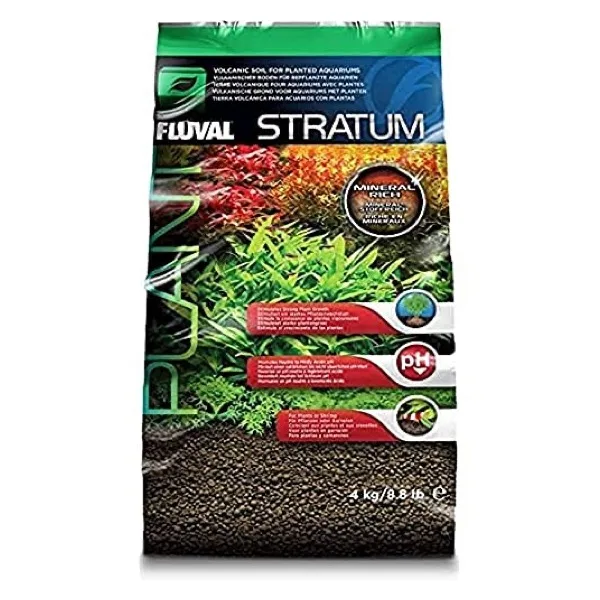
We earn a commission if you buy through Amazon links. It never changes the score. How we make money.
- +Nutrient-rich aquasoil that feeds plant roots directly
- +Gently buffers pH down, which most plants and shrimp prefer
- +Supports demanding carpet plants without heavy dosing
- +Shrimp safe, with a huge, long-standing owner base
- −Clouds the water for a day or two until it settles
- −Nutrients are largely spent after a year or two
- −Soft granules can break down if disturbed often
This is Fluval Plant and Shrimp Stratum, a nutrient-rich volcanic aquasoil for planted and shrimp aquariums. It feeds plant roots directly, gently buffers pH toward the acidic side that most plants and shrimp prefer, and comes as light, porous granules rather than inert gravel.
- Planted tanks, from easy stems to demanding carpet plants
- Shrimp keepers who want a buffering, shrimp-safe bed
- Beginners who want strong early plant growth without heavy dosing
- Anyone building a low-tech planted tank
- Fish-only tanks that do not need a nutrient substrate
- Rift-lake cichlids that want hard, alkaline water
- Keepers who want a bed that lasts indefinitely without replacement
- Deep beds that will be stirred often, since the granules are soft
We separate what the maker claims from what independent sources confirm, what owners report, and where we are drawing an inference. We do not bench-test products.
- Nutrient-rich volcanic aquasoil
- Mild pH buffering toward acidic
- For planted and shrimp tanks
- 8.8 lb bag of porous granules
- It is a nutrient aquasoil, not inert gravel
- The granules are light and porous
- Marketed as shrimp safe
- Widely treated as the default affordable aquasoil, praised for fast, healthy plant growth and shrimp safety
- Owners consistently note two things: it clouds the water for a day or two after setup, and its nutrients fade after a year or two so root tabs eventually help
- For the money it is the easiest route to a thriving planted tank, which is why it has the largest owner base in this category
- Treat it as a few-year consumable, not a permanent bed, and plan to supplement with root tabs later
A low one-time cost per bag; size the amount with the substrate calculator. The hidden long-term cost is that the nutrients deplete, so after a year or two you add root tabs or eventually refresh it. Rinsing is minimal, but expect a day or two of cloudiness at first.
- Clouds the water after setup until it settles, which fill-and-wait fixes
- Nutrients run down after a year or two, so growth slows without root tabs
- Soft granules break down if vacuumed or stirred hard
- Buffers pH down, which is wrong for hard-water cichlids
We do not bench-test substrate. Figures are the manufacturer's stated specs and the listing alongside aggregated owner feedback. We give gear guidance only, not plant-keeping or water-chemistry advice.
Barely. Unlike inert gravel it is not heavily dusty, but it does cloud the water for a day or two after setup, so fill gently and let it clear.
Yes. It feeds plants well for the first year or two, then the nutrients deplete and most keepers add root tabs rather than replacing the whole bed.
Yes, it is marketed and widely used as a shrimp-safe substrate, and its gentle pH buffering suits most dwarf shrimp.
Aim for 2 to 3 inches of depth for rooted plants. Enter your tank footprint and depth in our substrate calculator for the number of bags.