Air Stone for Fish Tank: Do You Need One? + Picks
An air stone for a fish tank adds surface movement and oxygen. Most filtered tanks can skip one; warm or medicated tanks benefit. See when and which.
An air stone adds oxygen indirectly: its bubbles ripple the surface, and that surface movement is what lets oxygen dissolve in. Most tanks with a working filter already get enough agitation and do not need one. Add an air stone if your tank is unfiltered or gently filtered, runs warm, is heavily stocked, or is being medicated; skip it on a pressurized-CO2 planted tank, where it drives the CO2 back out.
We earn a commission if you buy through Amazon links. It never changes the score. How we make money.
An air stone for a fish tank does one useful thing: it breaks the water surface with a stream of bubbles, and that surface movement is what actually adds oxygen. Here is the part most pages get wrong, though: the bubbles themselves barely oxygenate the water, and a tank with a decent filter already has the surface agitation it needs. So the honest answer to "do I need an air stone?" is usually no, with specific exceptions worth knowing. This guide covers what an air stone really does, a quick decision guide for your setup, the stone types, and how to set one up and clean it.
What an air stone does, and the myths
An air stone is a porous block or disc that an air pump pushes air through, breaking it into fine bubbles. The common myth is that the fish breathe the oxygen in those bubbles. They do not, not meaningfully. A bubble is in the water for a second or two, far too briefly to transfer much oxygen.
What actually oxygenates the tank is gas exchange at the surface, where oxygen dissolves in and carbon dioxide escapes. The bubbles help only because they push water up and ripple the surface, increasing the area where that exchange happens. So an air stone is really a surface-agitation tool. Anything else that ripples the surface, like a filter outflow, does the same job. That is why a well-filtered tank rarely needs a separate air stone, and why a tank with a dead-calm surface benefits from one.
Do you need one? A decision guide
Run through these. If none apply, you probably do not need an air stone:
- No filter, or a very gentle one? Yes, add an air stone for surface movement.
- Warm water, above about 80 degrees F? Helpful. Warm water holds less dissolved oxygen, so extra agitation matters more.
- Heavily stocked, or a lot of fish gasping at the surface? Yes, that is a low-oxygen sign; add agitation and check your stocking.
- Treating the tank with medication? Often yes. Some medications reduce oxygen, and the label may tell you to add aeration.
- Running a sponge filter? You already have one in effect; the sponge's bubble stream is doing this job, as our sponge versus HOB filter guide explains.
- A high-tech planted tank with pressurized CO2? No, and here it actively hurts. An air stone drives off the CO2 you are paying to add. Keep aeration for the night cycle only if at all, and see our CO2 systems category for how that is managed.
For most filtered community tanks, the filter already provides enough surface movement. The air stone is insurance for the cases above, not a default. If you are still sorting out the basics, our guide on whether you need a heater, filter and light covers what a tank genuinely requires before add-ons.
Do betta fish need an air pump?
Usually not. Bettas have a labyrinth organ that lets them gulp air from the surface, so they are less dependent on dissolved oxygen than most fish. In a filtered, gently moving betta tank, an air stone is optional and, if it creates too much current, unwelcome, since bettas dislike strong flow. If you do add one for a warm or planted betta tank, keep it to the gentlest bubble stream. Our guide on whether a betta needs a heater and filter covers the equipment a betta actually needs.
Air stone types compared
The stone shape changes the bubble and the noise:
| Type | Bubbles | Notes |
|---|---|---|
| Cylinder stone | Medium, in a column | The cheap classic; fine for most tanks |
| Disc or dome | Fine, over a wide area | Gentler, good for a broad curtain of bubbles |
| Flexible wand | A long curtain | Decorative back-wall effect |
| Ceramic or glass diffuser | Very fine mist | Quietest and finest, but clogs sooner |
Finer bubbles look nicer and ripple the surface a touch more per volume of air, but they need a stronger pump and clog faster. For plain oxygenation, a basic cylinder stone is plenty.
How to set up an air stone for a fish tank
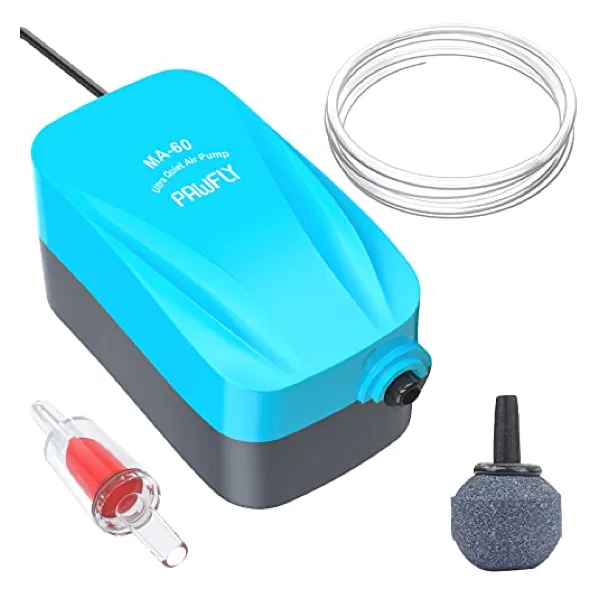
A compact pump that includes an air stone, check valve and tubing, the simplest complete kit for a small tank.
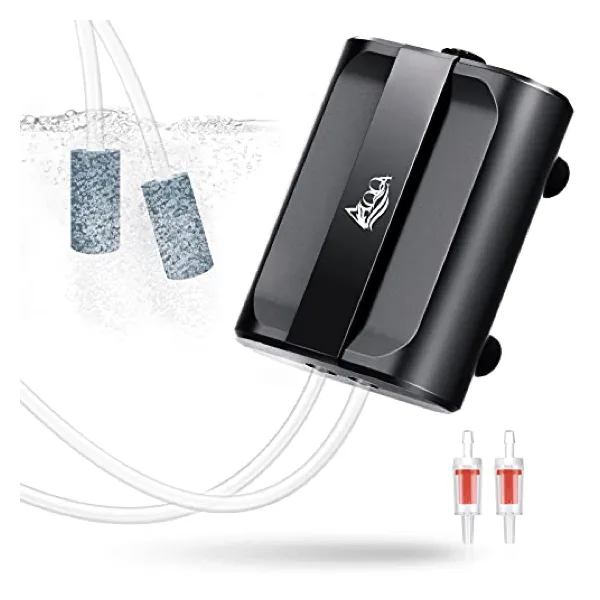
Two outlets and two stones for running a pair of tanks or both ends of one, with adjustable flow per side.
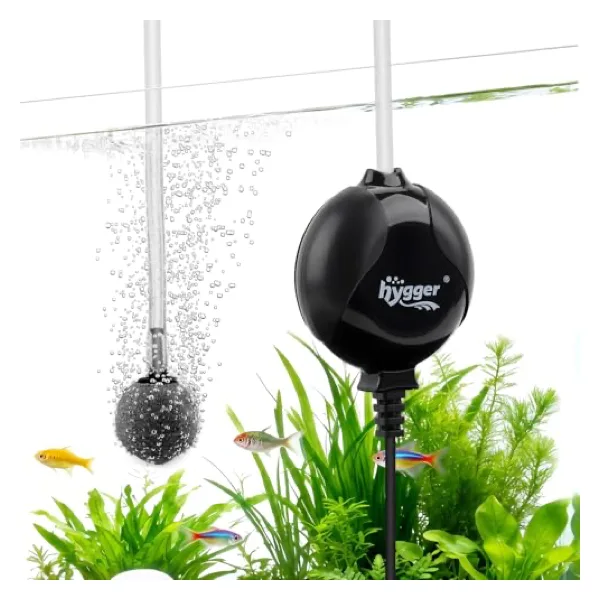
The quietest option for a bedroom or office tank, with low output that suits a betta or nano setup.
An air stone needs an air pump to run; the two are always bought together, and many pumps come with a stone and tubing included.
- Connect the airline from the pump outlet to the air stone.
- Fit a check valve in the line, oriented the right way, so that if the pump stops or loses power, tank water cannot siphon back down the tube and flood the pump.
- Sit the pump above the tank's water line if you can, as a second line of defence against back-siphoning.
- Sink the stone where you want the bubbles, often a back corner, and weight it or wedge it so it does not float.
- Turn it on and, if the pump or a valve allows, dial the flow to a gentle, steady stream.
Put a check valve below the tank's water line. A check valve in the airline is the cheap part that stops a stopped pump from siphoning tank water onto the floor and into the pump. Never run an air pump without one unless the pump sits above the water line.
How to clean an air stone
Over time a stone clogs with mineral scale and biofilm, and the bubbles weaken. To clean it: disconnect it, rinse off debris, then soak it in a solution of water and a little vinegar to dissolve mineral buildup, or boil a ceramic stone for a few minutes. Rinse thoroughly in dechlorinated water and let it dry before reconnecting. If a cheap stone stays clogged, just replace it; they cost very little. A pump that has weakened may also need a new diaphragm or simply a clean filter pad on its intake.
Sources
- The oxygenation principle, that dissolved oxygen enters the water through surface gas exchange rather than from the bubbles themselves, is standard aquarium practice; the air stone's value is the surface agitation it creates.
- Manufacturer product listings for each air pump and stone kit, for output rating, included accessories and intended tank size.
An air stone is a surface-agitation tool, not a magic oxygenator, and a well-filtered tank usually does not need one. Reach for it when the surface is calm, the water is warm, the tank is crowded, or a medication calls for aeration, and always run it through a check valve so a stopped pump cannot siphon the tank onto the floor. For a betta or a high-tech planted tank, think twice: the first dislikes the current, the second loses its CO2.
Common questions
What is an air stone?
An air stone is a porous block or disc that an air pump pushes air through, producing a stream of fine bubbles. Its real job is not the bubbles themselves but the surface movement they create, which is what lets oxygen dissolve into the water and carbon dioxide escape.
Do betta fish need an air pump?
Usually not. Bettas can gulp air from the surface through a labyrinth organ, so in a filtered, gently moving tank an air stone is optional. If the extra current is strong it can bother a betta, which dislikes heavy flow, so keep any bubble stream gentle.
How do you clean an air stone?
Disconnect it, rinse off debris, then soak it in water with a little vinegar to dissolve mineral scale, or boil a ceramic stone for a few minutes. Rinse it well in dechlorinated water and let it dry before reconnecting. Cheap stones that stay clogged are simply replaced.
Does my fish tank need an air pump?
Only in specific cases: an unfiltered or gently filtered tank, warm water that holds less oxygen, heavy stocking, or during medication. A tank with a filter that already ripples the surface usually has enough gas exchange without one.