Best lights
Independent rankings of freshwater aquarium lights by output and spectrum, plant-growth capability, and build and controls — planted-tank first.
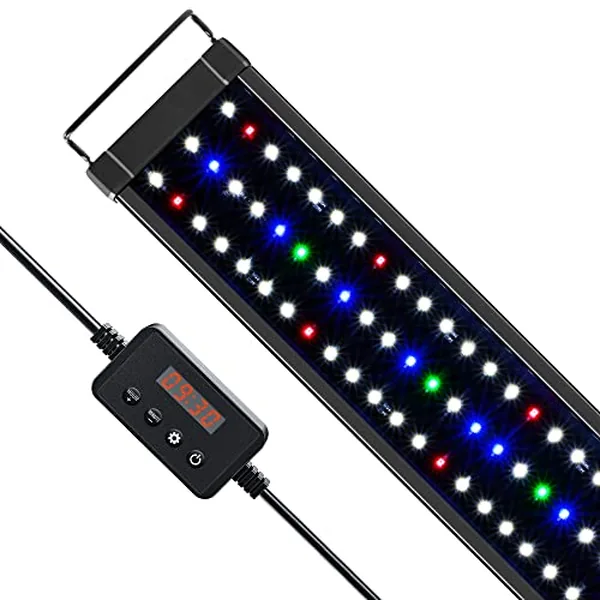
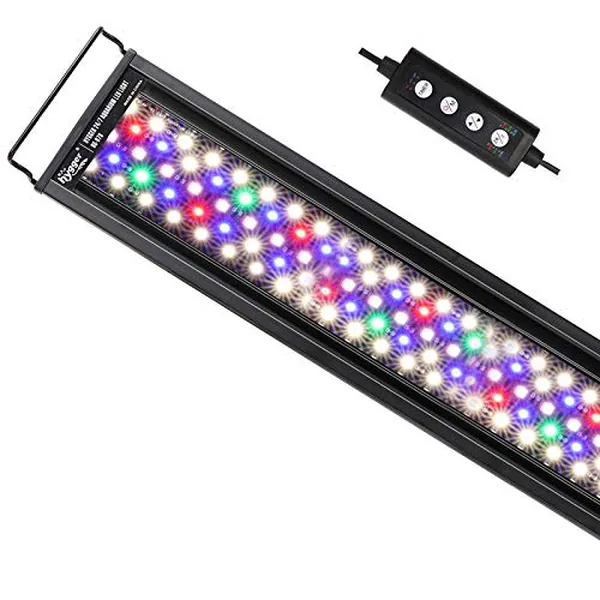
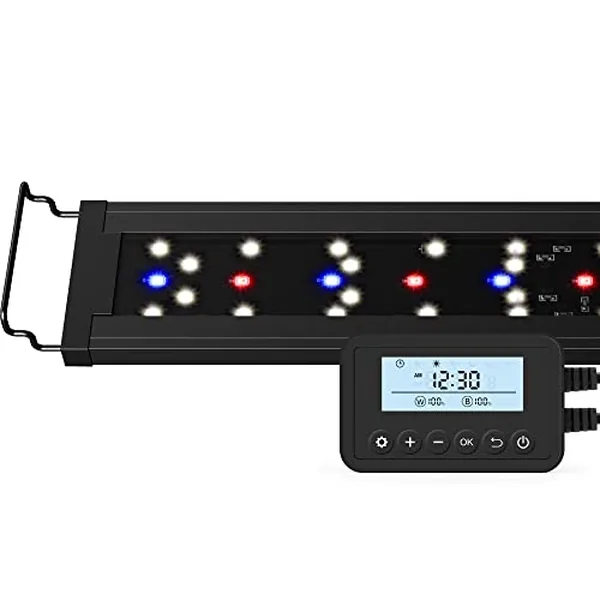
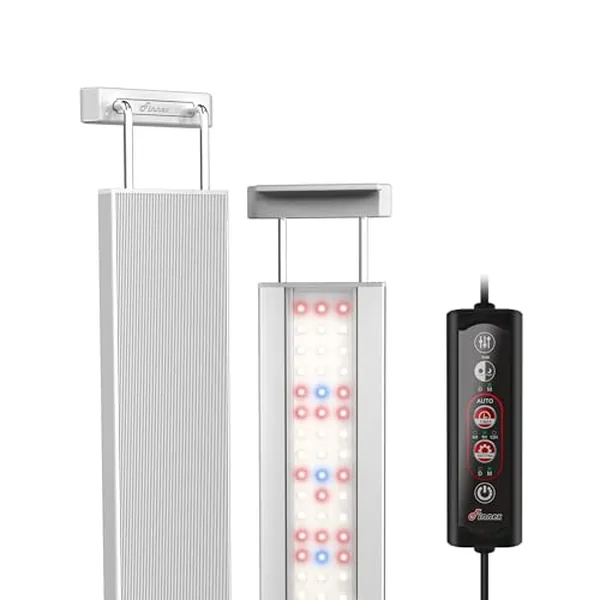
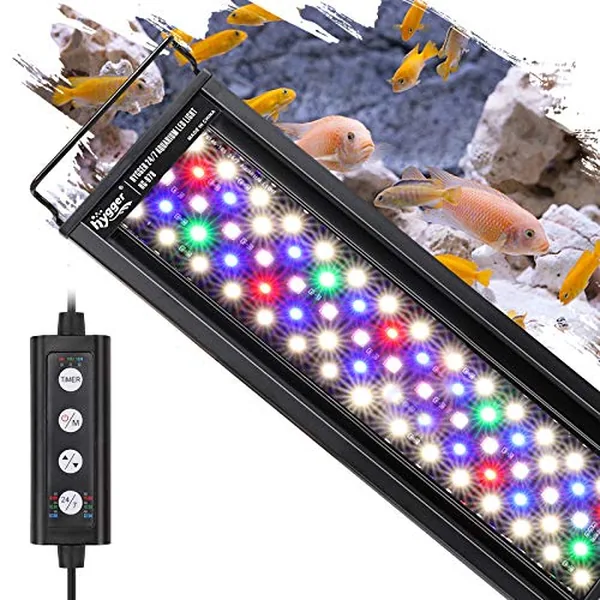
Buy the light that fits your tank's length, and match its strength to your setup. For a do-it-all planted light, the Fluval Plant 3.0 is the benchmark — full spectrum, app-controlled, waterproof, strong enough for carpets with CO2. On a budget, the NICREW ClassicLED Plus is the value default (great colour rendering, low-to-medium light), and the hygger 18W is the cheapest. Want a built-in timer without an app? The hygger Advanced 24/7. The one rule that saves tanks: do not put a high-light fixture on a low-tech tank without CO2 — more light than your plants can use just grows algae. Put whatever you buy on a 6-8 hour timer.
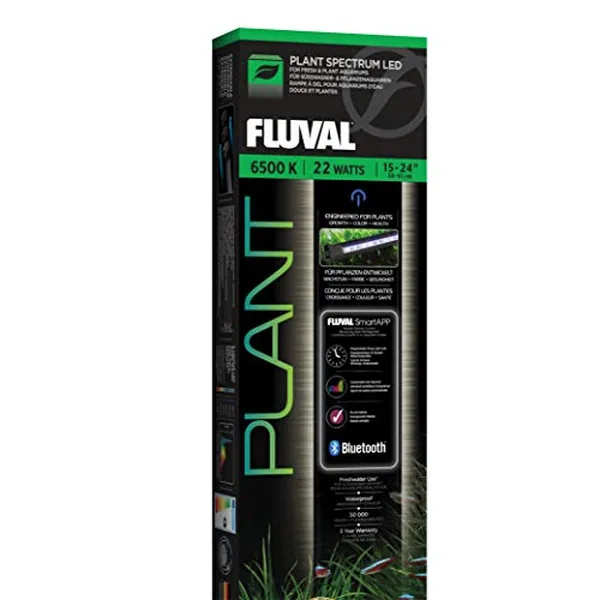
Fluval Plant 3.0 LED (15-24 in)
The best planted light here: a full spectrum, app-controlled fixture with strong output that supports demanding plants, from low-light Anubias to carpets. Programmable, waterproof, and the standard the others are measured against.
The rest, ranked
Lights guides
Community consensus
Community consensus is blunt about two things: buy the light that fits your tank's *length* (a fixture rated for a bigger tank wastes spill over the edges and can wash out a nano), and do not chase high PAR unless you run CO2 — the r/PlantedTank threads are full of algae outbreaks from too much light on low-tech tanks. Beginners are steered to NICREW and hygger for value, the Fluval Plant 3.0 as the do-it-all upgrade, and everyone is reminded to put the light on a timer.
- r/PlantedTank — lighting and algae threads
- The Planted Tank
- Aquarium Co-Op forum
What we didn't pick
- High-end aquascaping lights (Twinstar, Chihiros WRGB, Kessil)considered 2026-08-15
Genuinely excellent RGB fixtures with pro-grade PAR, but priced well above this tier and often bought through specialist channels rather than a mainstream listing. We kept to lights a beginner can buy and use out of the box.
- Hardware-store shop and grow lightsconsidered 2026-08-15
Cheap and bright, but the wrong spectrum and mounting for an aquarium, with no water resistance and no aquarium schedule. A false economy — and a splash risk over the tank.
Buying guide
Buy for your tank's length, not its gallons
Aquarium lights are sold by the tank length they span, because a fixture has to cover the whole footprint. A light rated for a 48-inch tank hung over a 24-inch one wastes half its output past the ends; a nano light over a 4-foot tank leaves the ends dark. So the first filter is simple: find the fixtures that fit your tank's length (most have extendable brackets for a little wiggle room), then compare them. Every pick below lists the length it covers.
Match the strength to your setup, or grow algae
This is the rule that saves more planted tanks than any gear choice. Plant growth is limited by whichever input runs out first — light, CO2, or nutrients. Add more light than your CO2 and ferts can keep up with, and the surplus feeds algae, not plants. A rough map of intensity, measured as PAR (photosynthetically active radiation) at the substrate:
| Light level | ~PAR at substrate | Grows | CO2 needed? |
|---|---|---|---|
| Low | ~25-50 | Anubias, java fern, crypts, mosses | No |
| Medium | ~100-150 | Most stems, easy carpets | Helps |
| High | ~150-250 | Demanding carpets, red plants | Yes |
If you run a low-tech tank (no CO2), a low-to-medium light on a timer is the sweet spot — which is exactly why the NICREW and hygger picks suit most beginners, and why you turn a stronger light like the Fluval down.
Spectrum: why RGB and colour rendering matter
Cheap white-only LEDs make a tank look flat and leave red plants looking brown. A full-spectrum light with real red and blue output grows plants better and renders colour properly — reds pop, greens look green. That is what CRI (colour rendering, as on the NICREW's CRI 91) and RGB fixtures (like the SkyLED and Fluval) buy you: healthier growth and a tank that actually looks good. You do not need tunable RGB to grow plants, but it is the nicest upgrade once the basics are covered.
Controls: timer, app, or nothing
Whatever you buy, it must run on a schedule — a fixed 6-8 hour photoperiod is the single best algae defence. You get there three ways: a light with a built-in timer (the hyggers), app control (the Fluval), or any light plus a cheap outlet timer (the NICREW, which has no timer of its own). Ramp-up/sunrise features are a pleasant bonus for the fish, not a necessity. Pick the control style you will actually use, and set the clock.
Sources
- Best LED Lights for Planted Tanks — PAR ranges by light level, and why a strong light without CO2 just grows algae — Aquarium Store Depot (review authority)
- How to Pick the Best Light for Freshwater Planted Aquariums — spectrum, intensity and matching light level to your plants — Aquarium Co-Op (how-to authority)
- Photosynthetically active radiation — the 400-700 nm light plants use for photosynthesis, quantified as PPFD (PAR at the substrate) — Wikipedia (science reference)
- Ultimate Guide to Aquarium Lighting — beginner, intermediate and advanced fixtures matched to tank size and plant type — Bulk Reef Supply Fresh (lighting authority)
Some links are affiliate links; they never change our rankings.