Best heaters
Independent rankings of freshwater aquarium heaters by temperature accuracy, reliability and safety.
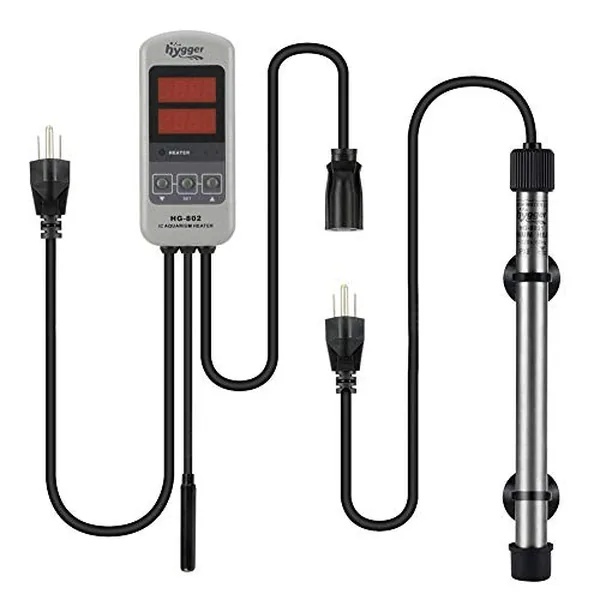
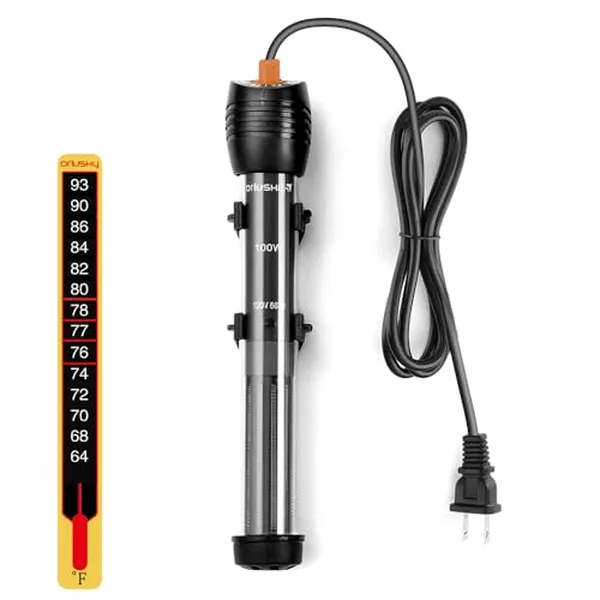
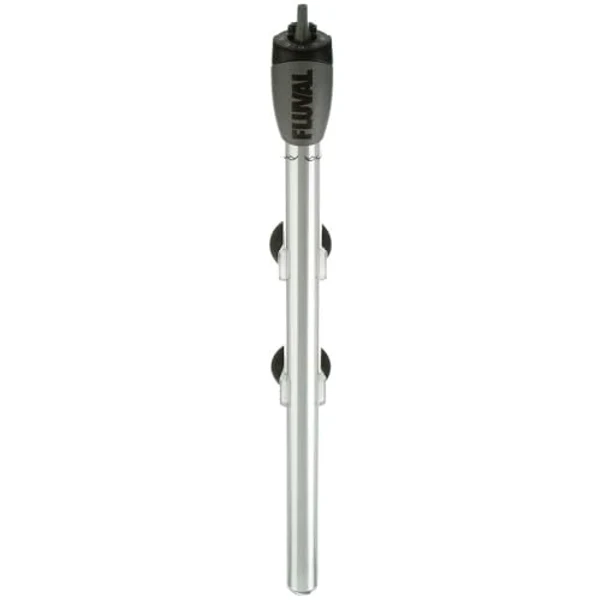
For most freshwater tanks the Eheim Jager is the safe default: accurate to within a degree, recalibratable, and with the longest reliability record in the hobby. Want the cheapest heater that works? The Orlushy, paired with a separate thermometer. Want a slim, better-built glass heater? The Fluval M100. The one rule that matters: pick a heater with auto shut-off (or titanium build) and size it to roughly 3-5 watts per gallon.
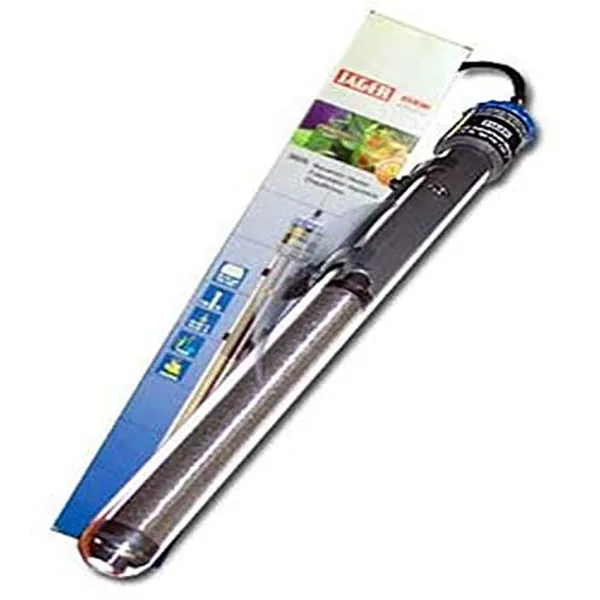
Eheim Jager 100W Aquarium Thermostat Heater
Accurate to within a degree, recalibratable, and with the longest reliability record in the hobby — the default freshwater pick.
The rest, ranked
Heaters guides
Community consensus
Community consensus consistently favours a controller-based or titanium heater over a bare glass one, and repeatedly warns that the real risk is a stuck-on thermostat rather than a heater that simply fails to warm. Longtime keepers point to the Eheim Jager as a durability benchmark, and near-universally recommend running a separate thermometer regardless of which heater you choose.
- r/Aquariums — heater reliability threads
- Aquarium Co-Op forum
- FishLore
What we didn't pick
- Cobalt Aquatics Neo-Thermconsidered 2026-08-13
A community favourite for accuracy, but we could not confirm a live, in-stock US listing at review time — the search surfaced the lower-rated Neo-Glass instead. We will revisit it when stock returns rather than link a wrong-product listing.
- Preset (non-adjustable) heatersconsidered 2026-08-13
Fixed around 78F with no dial, so you cannot tune to a species or nudge the tank for treatment. Fine as a cheap backup, not as a primary heater.
Buying guide
Size the wattage to the tank, not the fish
A rough working figure is 3-5 watts per gallon, more in a cold room and less in a warm one. Undersizing means the heater runs constantly; oversizing swings the temperature further if the thermostat ever sticks.
| Tank size | Warm room | Cold room |
|---|---|---|
| 10 gallon | 50 W | 75 W |
| 20 gallon | 75 W | 100 W |
| 40 gallon | 150 W | 200 W |
| 55 gallon | 200 W | 300 W |
The failure mode that actually matters
The dangerous failure is not a heater that stops warming — it is a thermostat that sticks on. Auto shut-off (or dry-run protection) and a shatter-resistant or titanium housing are the two features that separate a heater you can leave running from one you cannot. Tropical fish are cold-blooded, so a stable temperature is not a nicety: veterinary and manufacturer guidance both tie sudden swings to stress and disease, and a sudden drop is a classic trigger for ich.
Titanium vs glass vs electronic
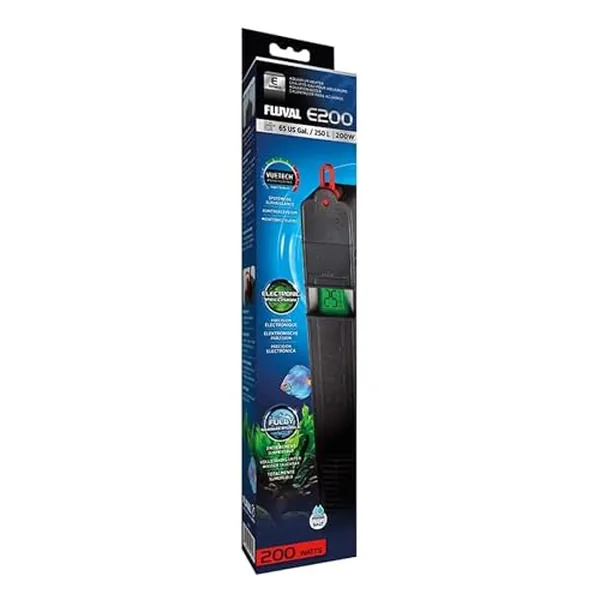
Titanium will not shatter and pairs with an external controller, which is why it dominates the value end. Glass heaters remain accurate and cheap but are the ones that crack. Electronic units add a real-time display so you can see the temperature rather than trust a dial — useful, at a premium. Whatever you buy, keep a separate thermometer: it is the cheapest insurance in the hobby.
Sources
- The 11 Best Aquarium Heaters — roundup and reliability notes — Aquarium Store Depot (review authority)
- Management of Aquarium Fish — fish are poikilothermic; temperature governs physiology and immune response — Merck Veterinary Manual (science authority)
- Water Temperature and Fish Health — tropical range 75-80F; sudden drops linked to ich — Aqueon (health authority)
- Fluval E200 Advanced Electronic Heater — dual-sensor VueTech electronics, UL listed — Fluval USA (manufacturer)
Some links are affiliate links; they never change our rankings.